The Season Starts with Memory
I grew up in Skagit Valley, home to one of the most well-known tulip festivals in the country. The festival has grown significantly over the years, drawing such large crowds that traffic has become a major challenge. But once you get there, the miles of gorgeous blooms nestled in the valley, with the Cascades rising as a beautiful backdrop, make every minute of the wait worth it.
That rhythm of anticipation, bloom, and payoff lives in my bones. It’s a ritual I’ve carried with me to every garden I’ve tended, recreating that memory each fall, bulb by bulb.
This year, though, I’m seeing it all with fresh eyes. My neighbor stopped me in the driveway last spring, completely enthralled with the tulips blooming in waves across my yard. She asked if I’d help her and her daughter plant some in their own yard. I said yes, of course, not thinking much of it at the time. Sometimes people say things like that to be nice.
But she was serious. When she approached me again in late summer, ready to start planning, I had to help her understand that we needed to wait for cooler weather. Still, I was thrilled she gave me advance notice so I could plan for it and make sure I had a weekend in mid to late October open.
As we started talking through the process, I realized something: what feels automatic to me after decades of doing this is actually full of details I’ve never had to articulate. Her family is from India, and she’d simply never been exposed to growing spring bulbs. And as we worked through the steps together, I found myself explaining things I didn’t even know I was paying attention to anymore.
The Garage Disaster: A Lesson in Timing and Storage
When I asked if she’d already purchased bulbs or needed help selecting them, she brightened. “Oh yes, I have two big bags in the garage!” She’d bought them at some point, thinking ahead, and stored them until we were ready to plant.
I should have asked more questions. I should have asked to take a look at them right then.
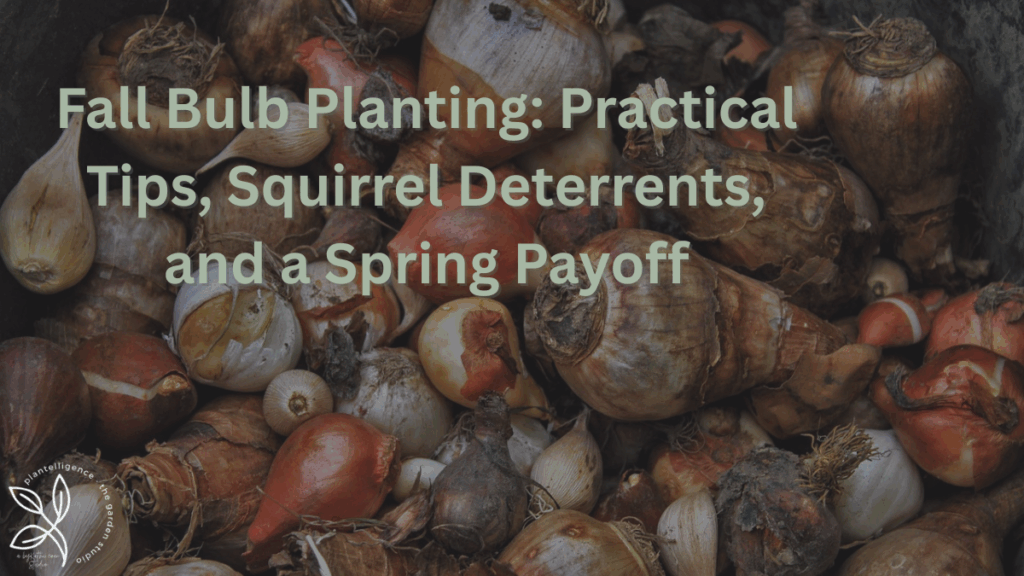
The day we gathered to plant, I opened the first bag. They looked like bulbs from the outside, but the moment I reached in, they crumbled to powder. They’d been baking in her garage for at least a year, probably longer. The garage wasn’t climate controlled, and the heat had done its damage. The second bag yielded maybe a dozen viable bulbs, at most.
Her daughter, a sharp mid-teen, wasn’t surprised. “Yeah, those have been in the garage a while,” she said matter-of-factly. Her mom had meant well, but bulbs aren’t something you can buy, forget about, and store indefinitely.
I felt terrible. She was so excited, and I didn’t want to dash her hopes. I had a few bulbs I hadn’t replanted yet after lifting them early for some landscaping work—maybe a dozen—and we combined those with what we could salvage from her bags.
I told her, “Let’s just get these in the ground. When I do my spring order, we’ll see what came up and what you need to supplement. We’ll plan together for next year.”
That moment crystallized something: bulb planting isn’t just about the physical act of putting something in the ground. It’s about timing, quality, planning, and understanding that these aren’t inert objects. They’re alive, and they deteriorate if ignored.
When to Plant Fall Bulbs
Bulbs need a cold period to trigger blooming, but they also need time to establish roots before winter truly sets in. The timing window is specific: plant after nighttime temperatures consistently drop below 50°F but before the ground freezes solid.
In my region, that means aiming for mid-October through early November. Keeping an eye on the extended weather forecast and planning for a stretch of cool, dry days makes all the difference. Planting too early while it’s still warm can cause bulbs to sprout prematurely; too late, and they won’t develop the root system they need to survive winter.
Soil Preparation for Healthy Bulbs
Good drainage is absolutely critical. Bulbs sitting in wet soil over winter will rot, no matter how perfectly every other step is followed.
- Test your drainage: Dig a hole about eight inches deep and fill it with water. If it doesn’t drain within a few hours, you need to amend the soil or choose a different spot.
- Amend heavy soil: In areas where clay soil gets particularly heavy, mix in some coarse sand or fine gravel.
- Sunlight: Ensure the area gets at least six hours of direct sunlight in spring (though many bulbs can handle partial shade once their leaves emerge).
- Fertilizer: Mix bone meal into the planting area at about one tablespoon per bulb. The slow-release phosphorus supports root development without encouraging too much leaf growth. Save the compost for spring.
Selecting Quality Bulbs
Whether ordering online or buying locally, look for bulbs that are firm without soft spots. Avoid any that feel light for their size or show signs of mold.
Several quality suppliers ship in fall—DutchBulbs.com, Breck’s, and Michigan Bulb—and all offer helpful bloom time descriptions. But big box stores, Costco, and garden centers also carry quality bulbs. The important thing is to plant them shortly after they arrive. Don’t let them sit in the garage for months. They deteriorate over time, as my neighbor learned the hard way.
Essential Planting Depth and Spacing
Most bulb distributors provide guidance on proper planting depth, but understanding why it matters is important: too shallow, and they’ll freeze; too deep, and they’ll struggle to reach the surface.
- The Rule of Thumb: Plant at a depth about three times the height of the bulb. If a tulip bulb is two inches tall, plant it six inches deep.
- Spacing: Plant bulbs about two to three times their width apart within each grouping.
- Drifts: Leave larger gaps between different groups to create natural drifts without overcrowding.
Watching my neighbor’s daughter measure carefully with her fingers reminded me how intentional this process can be for a beginner. She shared that she’d planted the irises in her backyard—the giant patch my husband and I have admired over the fence—by just sticking them in the ground. Having guidelines based on the mechanics of the bulb gave her a new confidence.
Creating Natural Groupings
Bulbs work best in clusters. A single tulip by itself looks lonely. Planted in groups of three, five, or seven, they make a statement.
Odd numbers create visual balance in a way that feels more organic. I like to create “floral rugs” using simple shapes like triangles or diamonds. As I mentioned in If Monet Had a Hose, I prefer impressionist-style planting: softened edges, blurred lines, and intentional layering.
Tulips bloom so upright that rows can feel rigid. Depth and movement work better. Plant early bloomers toward the back to allow late bloomers to hide the dying foliage of those that came before them.
Keeping Bulbs Safe from Squirrels
Squirrels are relentless. They react to freshly dug earth, sensing that this is where a nut was buried and needs retrieving. They’ll dig up bulbs, roll them between their teeth, decide they don’t like them, and leave them ruined on the grass.
I walked my neighbor through my defense strategy. We laid down chicken wire over the planted area, and I showed her exactly how to anchor it with garden staples. I learned the hard way last year that if you just pin the corners, squirrels will lift the edges and dig underneath. You have to secure the perimeter.
In my own yard, I’ve also started using wire cloches that look like upside-down wastebaskets. They are easy to hold in place and lift right off in spring.
Planning with a Spreadsheet: The Spring Order
Once the bulbs are in and protected, the work is done—but the planning for next year is just starting.
Ordering bulbs in spring rather than fall creates a much better result. When catalogs arrive in late winter, I build a fresh spreadsheet. I list every variety of interest within a color palette—reds, purples, deep pinks, creams—and include columns for bloom season (early, mid, late), color, and height. I might even add a column for “Planting Year” to help track crop rotation in the future.
Ordering from growers in spring means the bulbs arrive in fall when they are ready to go in the ground. No storage worries or sprouting surprises mid-summer.
Spring Payoff
My neighbor will get to enjoy the springtime show in her own yard when those shoots poke their heads up. We’ll assess what came up from the salvaged bulbs, what worked, and what didn’t.
Her daughter will remember the measuring, the spacing, and the odd-numbered clusters. Maybe she’ll plant bulbs in her own yard someday and realize how much knowledge quietly accumulates over the years.
And when someone stops to compliment the tulips, I hope my neighbor smiles. She did that last fall. And it was worth every crumbled bulb, every shovel, and every spreadsheet.
Related Plant Profiles & Experiments
- Mesh Onion Bags Experiment
- Trumpet Daffodil ‘Golden Harvest’
- Darwin Hybrid Impression Tulip Mix
- Fosteriana Tulip ‘Flaming Purissima’
- Mayflowering Tulip ‘Kingsblood’
- Perennial Delight Tulip Mix
Links Mentioned in This Article
- Wire Cloche: My preferred method for protecting fall bulbs from curious squirrels. Visit
- Garden Staples: Handy anywhere you want to anchor—whether it’s these wire cloches, regular chicken wire, or anything else that needs to stay put. Visit
- Mesh Onion Bags: A clever planting hack for grouping bulbs and deterring pests. Visit
Affiliate Disclosure: Some of the links in my posts are affiliate links. That means if you choose to click or buy, I may earn a small commission at no extra cost to you. It helps support this site and the ongoing work of growing, testing, and sharing what I learn here.