Plant Details
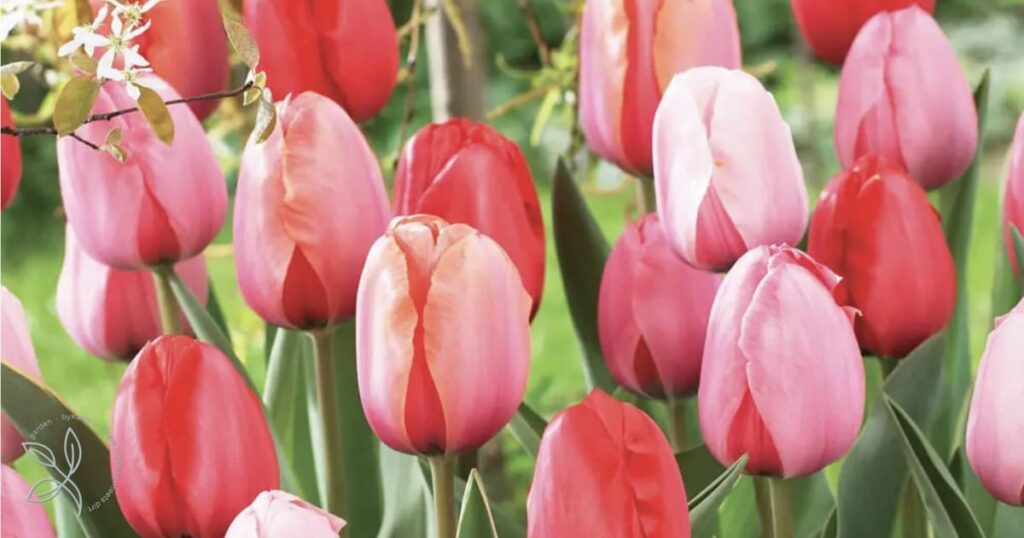
- Common Name: Darwin Hybrid Impression Tulip Mix
- Botanical Name: Tulipa (Darwin Hybrid group)
- Hardiness Zones: 3-8
- Height: 20-24 inches
- Bloom: Shades of soft pinks, corals, warm reds in mid spring (April)
- Light Requirements: Full Sun, Half Sun / Half Shade
- Soil Requirements: A sandy loam is ideal, as it provides good drainage and is permeable for roots.
Opening Observation
A field of memory, right in the yard.
Some flowers bloom from nostalgia. For me, tulips are one of those. I grew up in Skagit Valley, Washington, where tulips weren’t just a springtime decoration, they were a cultural event. The Tulip Festival marked the season as clearly as the scent of fresh soil. We didn’t just drive by the fields, we belonged to them. Some of us picked berries, others planted cabbages, and a few, like one of my childhood friends, spent spring harvesting tulip bulbs by hand.
So when I plant tulips now, especially a mix like this, it isn’t just about color. It’s about trying to recreate that visual rhythm, the pageantry of something fleeting and spectacular.
Where It Lives
I’ve planted tulips in every state I’ve lived in with varying degrees of success. Here in the Great Lakes region, they thrive.
These are planted in beds all over my yard, sunny or not. I mix early, mid, late, and very late blooming varieties together so something is always emerging or at peak. They’re bright, sort of spring shield to enjoy while waiting for the perennials that haven’t leafed out yet. Once the tulips are done and I cut them back, the perennials are usually coming up enough to create a soft reveal.
Because the tulips are spread throughout the yard and I plant other things in the same beds, I use markers to avoid slicing through bulbs when digging later in the season. The beds are slightly sloped but well-drained, and the tulips seem to appreciate the lift.
What I’ve Learned
I don’t lift my bulbs after blooming. I leave them in the ground and observe what comes back each year. If they fail to return, that becomes an opportunity to refresh the bed with new bulbs in the fall.
This particular mix returns more reliably than many others I’ve tried, and the height and bloom size make a strong showing even from a distance. They’re not immune to heavy weather, a windstorm or heat spike will shorten the show, but they hold their shape surprisingly well under normal spring swings.
Companionship Notes
These work beautifully in mixed beds with hyacinths and daffodils. The staggered bloom time keeps the garden looking alive through the transition from early to mid-spring. The Impression tulips in particular have a romantic quality, soft edges, painterly color blends, that play well with feathery foliage or low structural evergreens.
Maintenance Rhythm
I let the foliage yellow in place, and I don’t braid or bind it. When it’s ready to pull, I pull it. If I’m planting something new nearby and the tulips are still in active leaf, I wait. That pause is part of the rhythm.
The Verdict (So Far)
Absolutely worth planting, and a mix I’ll likely reorder. I appreciate how the variety within the mix still holds together visually — not chaotic, just diverse. They naturalize modestly and don’t seem to diminish too quickly. As long as they keep coming back, I’ll keep giving them space.
Want more on how I plan and protect my fall bulbs? Read the full article here.
Affiliate Disclosure: Some of the links in my posts are affiliate links. That means if you choose to click or buy, I may earn a small commission at no extra cost to you. It helps support this site and the ongoing work of growing, testing, and sharing what I learn here.