Plant Details
- Common Name: Mayflowering Tulip ‘Kingsblood’
- Botanical Name: Tulipa ‘Kingsblood’
- Hardiness Zones: 3–8
- Height: Up to 26 inches
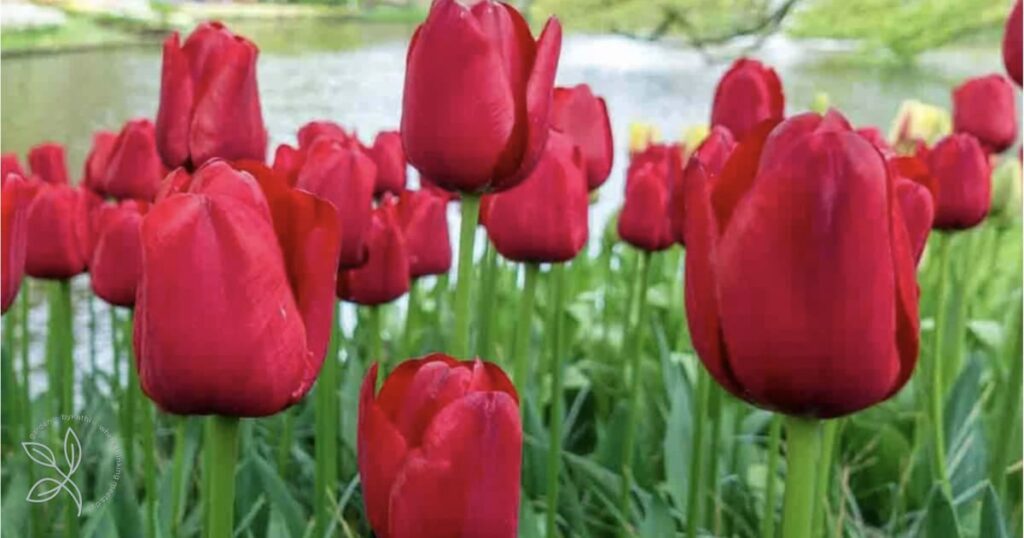
- Bloom: Rich scarlet red in late spring (May)
- Light Requirements: Full Sun, Half Sun / Half Shade
- Soil Requirements: Well-drained, fertile
Opening Observation
Every spring, when the Kingsblood tulips open, I think back to high school lawns in Skagit Valley, when students would use spent tulip petals to make campaign art on the grass. Reds for the letters, yellows and whites for the outlines. It was temporary and messy and absolutely beautiful. Those petals came from local farms after the bloom fields were cut back, and there was something both rebellious and wholesome about it, using what was left to spell out Vote for Kim or Go Bulldogs! in living color.
If we had planted Kingsblood back then, that saturated red would have carried the whole message without a single poster board. Now, decades later, I plant these in my garden, not for messages but for memory; a quiet nod to where I learned that color itself can speak.
What It Is
Kingsblood is not subtle. It is tall, confident, and unapologetically red. The petals open wide on warm days, catching light in a way that makes the color seem to glow from within. This is a Mayflowering tulip, bred to bloom late in the season when most of the others have faded. It is the closer, the finale, the one that lets you hold onto tulip season a little longer.
What I love most is the steadiness. Even as temperatures climb and the rest of the garden shifts toward early summer, these stay upright and deliberate. They remind me of students still standing on the lawn after the pep rally, refusing to let the day end.
Where It Lives
Mine are planted along the southeast back fence, where I can see them clearly from the kitchen and family room. The bed catches morning light and dries quickly after rain; good drainage matters. They share space with a few mid-season tulips and daffodils that have already finished by the time Kingsblood begins to bloom. The red holds beautifully against the soft greens of new hosta leaves and the fading gold of early narcissus. It feels like the perfect hand-off between spring and summer.
What I’ve Learned
Every year, these surprise me with how long they last. When most tulips are fading, Kingsblood is still perfect, tall stems, unbent, color holding strong through warm afternoons and windy days. The red deepens as the bloom matures, shifting from bright scarlet to something richer, almost like old velvet. They have outlasted heat waves and late storms with hardly a mark. I always think I will cut them back sooner, but I never do; they stay too beautiful for too long.
Companionship Notes
Kingsblood loves contrast. Pale yellows, creamy whites, or soft lavenders make the red even more vivid. I have them near soft pink Darwins and fading hyacinths, and the combination feels balanced, strong but not harsh. In larger groups, they read like punctuation across the garden, confident but composed.
Maintenance Rhythm
I plant tulips in clusters rather than rows, mixing varieties across bloom times to stretch the season. Kingsblood goes in like the rest, about six inches deep in fall, where the soil drains well. I let the foliage die back naturally and rarely lift the bulbs. They have proven resilient enough to return for several seasons without special care, which earns them a permanent place in the rhythm of spring cleanup and renewal.
The Verdict (So Far)
A strong finisher, full of conviction. Kingsblood closes the tulip season with authority that makes you stop and take notice. It is not the one you plant for subtlety; it is the one you plant for presence. And maybe that is the point, to end the season not with a whisper, but with a statement.
Affiliate Disclosure: Some of the links in my posts are affiliate links. That means if you choose to click or buy, I may earn a small commission at no extra cost to you. It helps support this site and the ongoing work of growing, testing, and sharing what I learn here.