Plant Details
- Common Name: Crimson Clover
- Botanical Name: Trifolium incarnatum
- Hardiness Zones: 6 – 9
- Height: 12 – 20 inches
- Spread: 10 – 12 inches
- Foliage: Bright green, soft, trifoliate leaves; annual
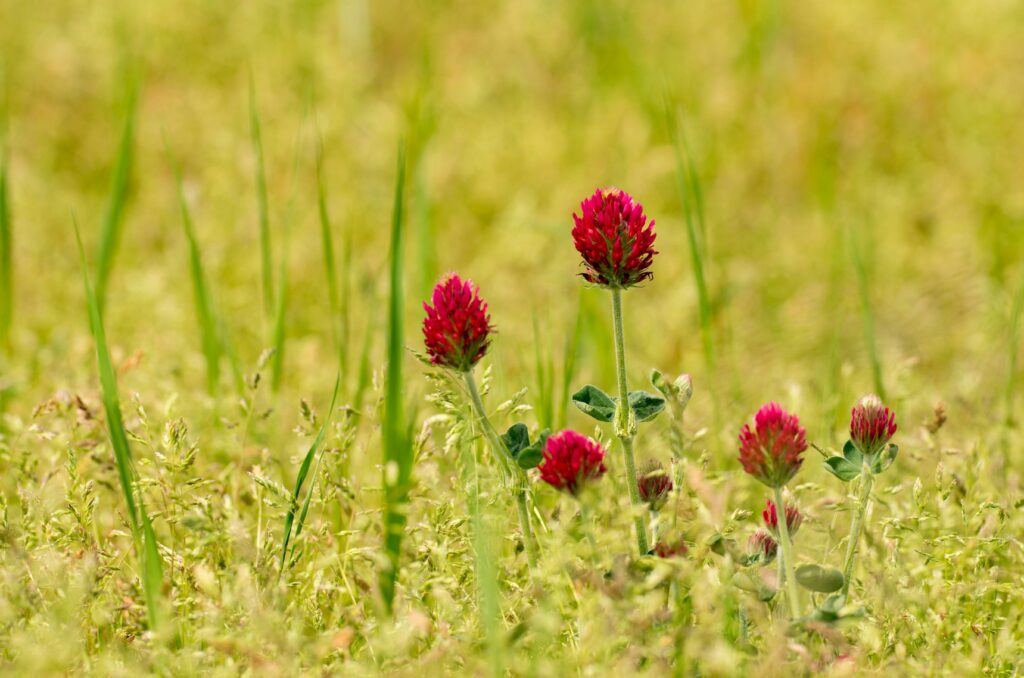
- Bloom: Deep crimson-red flower spikes in late spring
- Growth Rate: Fast
- Light Requirements: Full sun to light shade
- Soil Requirements: Well-drained; tolerates poor or depleted soil
- Water Requirements: Moderate; consistent moisture preferred
- Notable Notes: Fixes nitrogen, attracts pollinators, moderately self-seeding, thrives in poor soil, effective as short-term cover crop.
crimson clover
- Common Name: Crimson Clover
- Botanical Name: Trifolium incarnatum
- Hardiness Zones: Annual — all zones
- Height: 12-36 inches
- Spread: Spreading mound
- Foliage: Bright trifoliate leaves, soft texture
- Bloom: Deep crimson flower spikes, spring through summer
- Growth Rate: Fast
- Light: Full sun
- Soil: Poor to average, well-drained; fixes nitrogen
- Water: Low to moderate
Opening Observation
I came to Crimson Clover while searching for a solution, not a showpiece. The back edge of my yard, where the property meets the easement, has been a quiet mess for years. Between the trees and the buried utility lines, the stretch will continue to be a challenge. Burdock has settled in and made itself at home, and it is going to take steady work to win the fight without accidentally unearthing any utility lines in the process. I was looking for a natural, non-digging solution, something that could help suppress the weeds without adding another long-term problem of its own.
That search led me to the concept of overcropping. I had heard the term before, but only in the context of commercial agriculture, never as something a home gardener might try. The idea made immediate sense: find a plant that grows faster and thicker than the weeds and let it do the work for you. Of the variety of candidates that came back, Crimson Clover and buckwheat were my top two viable options, the most promising and least invasive over time. Both offered quick germination and good coverage, and both seemed like they could hold their own against the burdock. Crimson Clover added a bonus I had not expected: rich red blooms that improve the soil while drawing in pollinators. It looked like the kind of plant that could turn a problem area into something that actually felt alive again.
What It Is
Crimson Clover is a fast-growing annual legume known for its striking crimson flower spikes and soft, lush green foliage. It grows upright but compact, forming mounds of bright trifoliate leaves that look delicate up close yet fill space quickly. When in bloom, the long, tapered flowers stand above the foliage like candles, coloring fields and meadows with a deep red hue that seems to glow at sunset. Native to Europe and naturalized across much of North America, it thrives in lean soil and lends both beauty and quiet resilience wherever it is sown. For practical growing guidance, MSU Extension has a solid overview of management and timing.
What It Does and Why I Love It
I am not planting Crimson Clover for its beauty, though I appreciate it. I am using it as a worker in the garden, a seasonal partner that helps me reclaim and rebuild the back beds without tearing them apart. It suppresses weeds, steadies the soil, and gives something back to it, all while looking like it belongs there.
For my purposes, the timing is the key. Left on its own, it will reseed easily and take over more than I want. Managed closely, it stays contained and predictable, doing its work through fall and winter before stepping aside for whatever comes next. That rhythm suits the way I like to garden, collaborative, not controlling. It lets me feel like I am working with the soil, not against it.
Where It Lives
Crimson Clover will eventually join the other cover crops in the utility and panel garden beds at the back of my yard, spaces that receive full morning sun and dappled afternoon light. The soil there is heavy and uneven, still recovering from years of neglect before we moved in. It is the kind of environment this plant was made for, spaces that need help finding balance again.
What I Have Learned
Timing matters. Crimson Clover takes time to bloom, so planting in late September or early October helps limit reseeding while still giving it a chance to take hold. For me, that is an advantage. I want something that works hard in one season and quietly steps aside for the next.
Maintenance Rhythm
Crimson Clover should be cut or turned before it blooms if you want to prevent reseeding. For gardeners who enjoy the flash of red flowers, it can also serve as a beautiful seasonal groundcover, but the key is awareness. Once I understand how its growth syncs with my local frost cycle, I will know whether it can become part of a long-term rotation.
The Verdict (So Far)
Crimson Clover feels like a strong candidate for the long game. I have not planted it yet, but I can already see its potential. If it proves as cooperative as it looks, it could become one of those quiet background players that make the rest of the garden better. Beautiful, beneficial, and bound by rhythm, everything I want in a helper plant.
In My Garden
- Seeds purchased on Amazon. Utility and Panel Gardens.
- Seeds on hand. Planning a small trial area this season — enough to understand how it behaves in my specific conditions before committing more space to it. Crimson clover grows wild in the fields near the house, which tells me it does well in this climate. It also tells me I need to respect its reseeding instinct. A contained test feels like the right first move.