It started with a post in a local mom’s group. A neighbor was hoping to surprise her parents while they were away on an extended trip, a refreshed front yard ready to come home to. She was willing to do the planting herself. She just needed someone to tell her what to plant, how many, and how to make it feel intentional. I said yes.
What followed was a full front yard plan across four beds. Most of it never got planted. But this one did, the bed below the window her mother wakes up to every morning, and the decisions that shaped it are ones I keep thinking about.
The Hostas Were Gorgeous
From a distance, the quarter-circle bed looked exactly right. Lush, variegated hostas, 18 to 24 inches tall, forming a plush, soft border along the edge. They were doing everything right: texture, height, cohesion. They had clearly been happy there for years.
Up close was a different story. They were a jungle. So densely compacted that new growth had nowhere to go. The crowns were crowding each other. The centers of the oldest clumps were starting to die back. They were not thriving. They were surviving, which is a different thing, and they had been doing it for long enough that the bed had started to feel more like an obstacle than a garden.
The thorny decision was this: the hostas needed to be divided significantly, and dividing them would mean cutting through healthy root systems and temporarily making the bed look worse before it looked better. That is a hard sell when someone is trying to create something beautiful for a surprise. It also sits uncomfortably with something I feel strongly about. I find it genuinely difficult to discard a healthy plant. There is something that feels wasteful about it, even when it is the right call.
But this was the right call. Thinning them was not destruction. It was the most generous thing we could do for a plant that had outgrown its space. We pulled the most compacted clumps, divided the crowns, and replanted what belonged. What was set aside went to other spots in the yard rather than the compost pile, which helped. What was left had room to breathe for the first time in years.
The lesson in that is worth naming: sometimes what looks like abundance is actually congestion, and the kindest cut is the one that feels the most counterintuitive.
What the Bed Needed Next
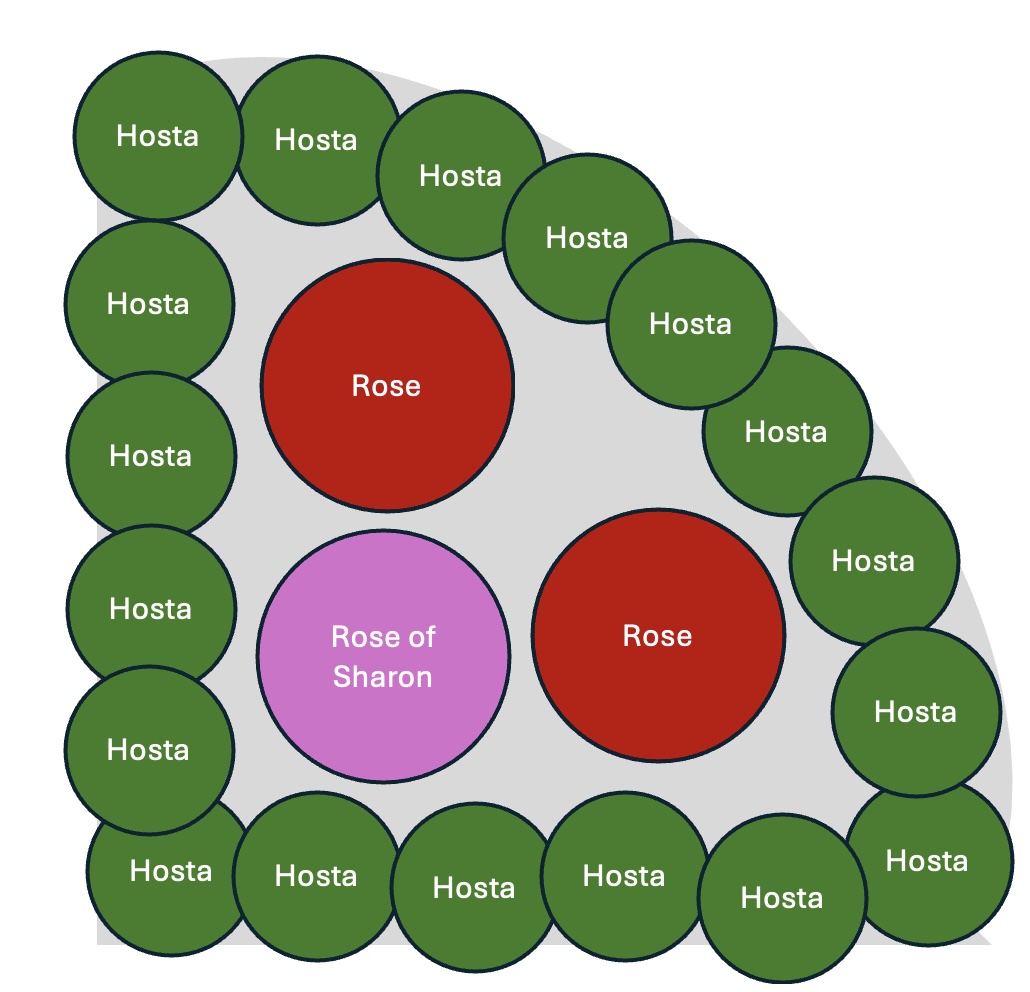
With the hostas sorted, the quarter-circle had a clear shape and genuine room to work with. The brief was flowers, something beautiful visible from the window, low maintenance, plants that could earn their place without demanding much in return. Her mother loves roses. She also mentioned the sun is fierce on this side of the house and heats up the rooms, so something with a little height and presence would help.
I spent time on this. I wanted to give her something that earned its place through all four seasons, not just when it bloomed. I looked at a dwarf blue spruce, a hinoki cypress, a weigela ‘Wine and Roses’ with its deep burgundy foliage and pink flowers. I even went looking for a sun-loving fragrant evergreen in a globe form, the kind of plant that would tick every box at once. There is one: Daphne ‘Eternal Fragrance.’ It blooms, it holds its shape, it smells extraordinary. It also needs perfect drainage, and this bed was not set up for it. So I let it go.
In the end I came back to what she already had. Three plants were ready to relocate from elsewhere in the yard: two rose bushes and a white Rose of Sharon with a red throat. Relocating them rather than buying new was the right call, both practically and philosophically. These were healthy plants in the wrong spots. Moving them gave them a second life and gave this bed a story.
The roses went into the bed, one toward each end, framing the space. The Rose of Sharon went into the back corner, off-center, tucked into the sharpest point of the quarter-circle where it could grow tall and dramatic without competing with the roses for attention. The asymmetry was intentional. Three plants of similar height placed symmetrically would have felt rigid. Offsetting the tallest one gave the bed a natural focal point and a sense of movement.
I also liked that the Rose of Sharon left her options. If she ever wants to invest a bit more time, she could train it into a small tree form, 8 to 12 feet tall, with sculptural lines and dramatic late-summer blooms. That kind of flexibility matters in a garden that may evolve over time.
Moving Plants Without Losing Them
Relocating established plants is worth doing carefully. The goal is to give them the best possible chance in their new home, which means minimizing the stress of the move.
Water deeply the day before digging so the soil holds together around the root ball. Dig wide rather than just deep. The feeder roots spread further than most people expect, and preserving them matters more than the tap root. If there is any delay between lifting and replanting, keep the roots shaded and moist. Replant at the same depth the plant was growing at before, water thoroughly at planting, and then water daily for the first several days until you see signs that the plant has settled. Hold off on fertilizer until new growth appears. Pushing the plant to perform before it has reestablished its roots does more harm than good.
Extra attention in those first weeks is what makes a transplant look like it was always meant to be there.
What It Looks Like Now
A bed that was working too hard to look effortless is now doing both things at once. The hostas have room. The roses have a purpose. The Rose of Sharon has a corner to own. And the window above it has something worth looking at when the curtains open in the morning.
The whole thing came from plants that were already there, already healthy, already waiting for someone to put them in the right place. That is its own kind of satisfaction.
This bed was part of a complete multi-bed planting plan — bubble diagrams, plant photos, a full detail table, and a shopping list. Download it free here.