Plant Details
- Common Name: Oakleaf Hydrangea ‘Munchkin’
- Botanical Name: Hydrangea quercifolia ‘Munchkin’
- Hardiness Zones: 5-8
- Height: 3 to 4 feet
- Spread: 4 to 5 feet
- Foliage: Deep green, oak-shaped leaves that turn rich mahogany red in autumn; deciduous.
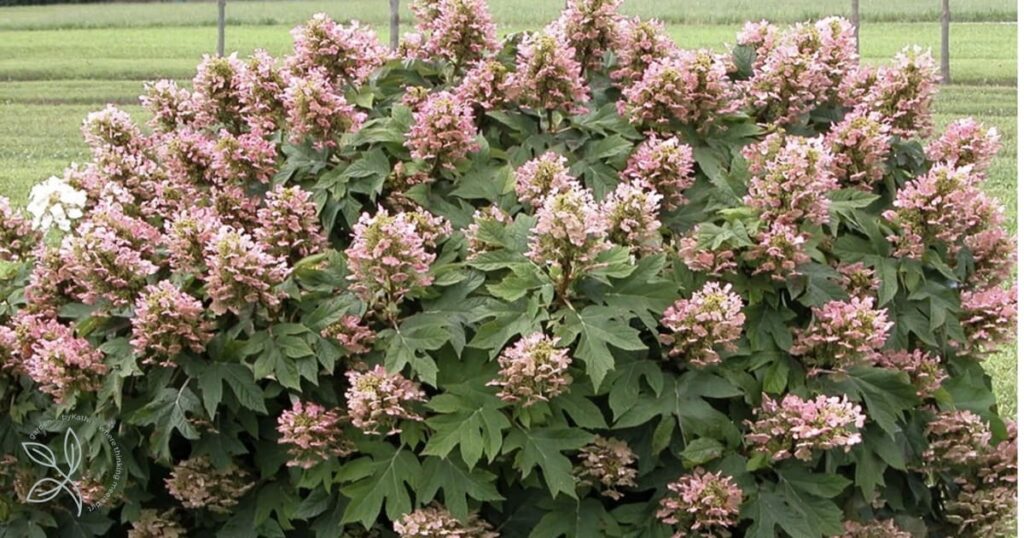
- Bloom: Compact conical clusters of white flowers that age to pink and persist through late summer; blooms on old wood; perennial.
- Growth Rate: Moderate
- Light Requirements: Full sun to part shade; afternoon shade preferred in warmer zones.
- Soil Requirements: Moist, well-drained soil enriched with organic matter; tolerates clay when amended.
- Water Requirements: Regular moisture, especially in dry spells; avoid full drought.
- Notable Notes: Made for smaller spaces, with sturdy stems that stay upright. Pollinators love it, and deer tend to leave it alone.
Opening Observation
When my landscaping expert suggested oakleaf hydrangeas for the new front beds, I had to look them up. Hydrangea? Absolutely. But oakleaf? That was new to me. He had just returned from an architecture tour in Chicago and mentioned that the tour guide described oakleaf hydrangeas as a designer favorite for their structure, texture, and four-season appeal, yet still surprisingly rare outside the city. That combination of beauty and understatement was all the convincing I needed.
We chose the Munchkin variety, a compact form that fits the scale of the house and complements the structured look of the new design. Five went in this fall, three forming a hedge along the side of the garage and two in front of the living room window. It was late in the season, too late for flowering, but the leaves alone were worth it. Thick, lobed, and sculptural, they already look like a plant that belongs in the architecture of the space.
What It Is
Oakleaf hydrangea (Hydrangea quercifolia) is a deciduous shrub native to the southeastern United States, known for its large, oak-shaped leaves and tall pyramidal flower clusters. The Munchkin variety is a compact selection developed by the U.S. National Arboretum for smaller spaces. It typically matures around three feet tall and four to five feet wide, with dense branching and sturdy stems that hold their blooms upright.
The flowers are creamy white and gradually age to pink or tan through summer, eventually drying into papery cones that stay decorative well into fall. As the season cools, the leaves turn shades of bronze, burgundy, and wine before dropping. The bark exfoliates with age, revealing a cinnamon tone that adds quiet winter interest.
Oakleaf hydrangeas are more tolerant of sun and drought than their bigleaf cousins once established, but they still prefer rich, moist, well-drained soil. They bloom on old wood, so pruning is best done right after flowering to protect next year’s buds.
Where It Lives
The Munchkin hydrangeas form the backbone of my new front beds, replacing a mix of older foundation plantings that never suited the house. Along the garage, the hedge of three will eventually frame the corner and soften the lines of the house. The two in front of the living room window balance the design, grounding the facade without blocking light or sightlines.
They share the space with a globe-shaped arborvitae, spirea, flowering onion, and silvery artemisia, a palette of textures that keeps the garden lively through the seasons. All of it complements the Japanese maple nearby, whose graceful canopy ties the design together.
Right now, the oakleaf hydrangeas are still young, mostly leaves and stems settling into compost-enriched soil before winter. Even without blooms, the foliage is impressive. It has a sculptural quality that makes the front garden feel composed, connected to the geometry of the house itself. I can already picture next summer’s blooms, those upright white panicles lighting the space the way a clean architectural line catches the sun.
What I’ve Learned
I am learning that oakleaf hydrangeas are not simply another version of the bigleaf type but a different experience entirely. They are sturdier, more structural, and in many ways more forgiving. The leaves are thick and textured, able to handle more sun than I expected, and the plants seem completely unbothered by the reflected heat along the garage wall. Even as new plantings, they have held their deep green color late into fall.
They remind me that not every hydrangea is about the flower. The architecture of the plant, the layered leaves, the texture, the rhythm of its branching, is what makes it extraordinary. These are the plants that will teach me patience, showing their beauty slowly, season by season.
Companionship Notes
The oakleaf hydrangeas carry a different energy from the other hydrangeas in my garden. They feel designed, not decorative. In the front beds, they pair easily with boxwood, spirea, ornamental grasses, flowering onion, and the soft shimmer of artemisia. The mix creates a layered balance of structure and lightness. Over time, they will tie the entire border together, bridging the line between formality and natural growth.
Their leaves add dimension even when still, their shape creating subtle movement that softens the geometry of the house. When they bloom, the creamy cones will lift the color palette of the front garden, bringing texture and contrast without overpowering the space. I love that they change through the year, from green to white to bronze, never losing their poise.
Maintenance Rhythm
For now, care is simple: regular watering while they establish, a top-dressing of compost in spring, and patience. Oakleaf hydrangeas prefer to be left alone once their roots settle. I will resist pruning until after their first full bloom season, likely next summer. Through winter, I will leave the leaves and stems in place for insulation and the bark for visual interest.
They seem to value good soil preparation over constant maintenance, which makes them an easy match for how I like to garden. I have learned that thoughtful beginnings tend to outlast quick fixes.
The Verdict (So Far)
It is still early, but I am already convinced that oakleaf hydrangeas were the right choice. The Munchkin variety fits the space perfectly, structured yet natural, substantial without feeling heavy. Even without blooms, their presence makes the front of the house feel intentional.
Hydrangeas have always been a requirement for me, and this variety feels like a natural extension of that love, familiar enough to feel like home, yet new enough to make me pay attention again. If you want to explore oakleaf hydrangeas, Gatsby Moon Oakleaf Hydrangea at Nature Hills is a compact cultivar worth considering.
Notes from the Field
- August 2025: Planted late in the season; establishing roots before winter.
- Winter 2025: Monitoring for leaf drop and bark color; first full bloom expected next summer.
- Spring 2026 (anticipated): Expecting compact, dense growth and early white panicles; will evaluate pruning after first flowering.
Affiliate Disclosure: Some of the links in my posts are affiliate links.
That means if you choose to click or buy, I may earn a small commission at no extra cost to you.
These links help support the ongoing work of growing, testing, and sharing that I do in this space.