Plant Details
- Common Name: Astilbe
- Botanical Name: Astilbe chinensis (and hybrids)
- Hardiness Zones: 4-9
- Height: 18–30 inches
- Spread: 18–24 inches
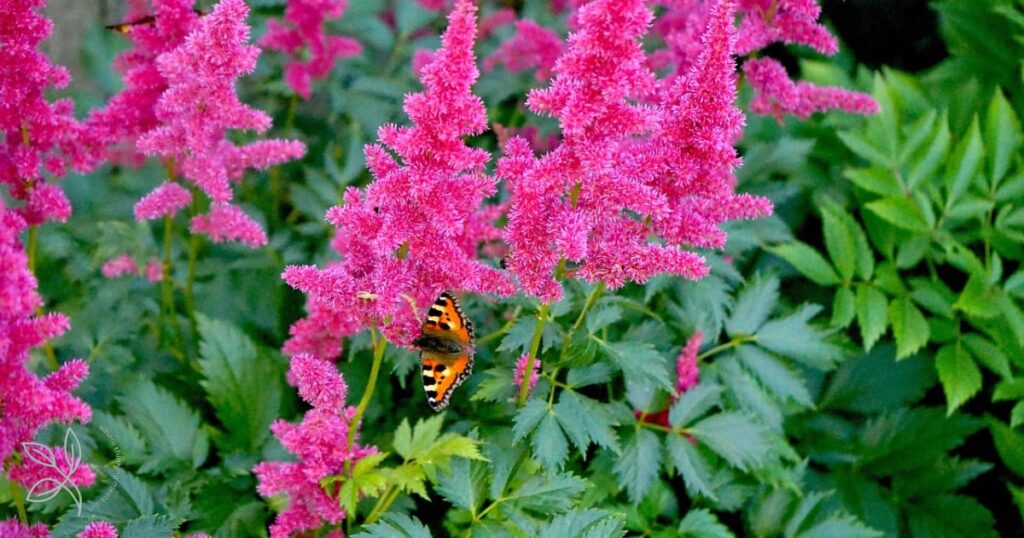
- Foliage: Deep green to bronze-green, finely divided, fern-like texture
- Bloom: Early to midsummer; feathery plumes in shades of red, pink, lavender, and white
- Growth Rate: Moderate
- Light Requirements: Partial shade to full shade
- Soil Requirements: Moist, rich, well-drained soil high in organic matter
- Water Requirements: Consistent moisture; do not allow soil to dry out
- Notable Notes: Adds color, texture, and movement to shaded beds; excellent with ferns, hostas, and heuchera; deer resistant
Opening Observation
Astilbe has followed me for years, in catalogs, garden centers, other people’s yards, but somehow never home with me. I have put them in my online cart more times than I can count, only to trim them out at the last minute. Not yet, I would think. No good place for them.
This fall, that changed. The back panel garden finally gave me the space and light they had been waiting for: rich soil, steady moisture, a little morning sun. I tucked ten roots into the cool earth in early October 2025, and before the frost came, they had already started to wake. If they overwinter well, next summer should be the season they make themselves known.
What It Is
Astilbe has a way of softening everything around it. The feathery plumes rise through part shade in reds, pinks, lavenders, and white, catching the light and moving just enough to look alive in still air. It is not a plant you notice for its color alone, but for the way it makes color behave: diffused, luminous, fleeting.
The leaves stay beautiful long after the blooms fade, deep green to bronze with the kind of texture that keeps a garden interesting between flowering cycles. Together, the plumes and foliage create a quiet counterpoint to stronger forms such as arborvitae or hydrangea.
Where It Lives
The astilbe now live in my Panels Garden, along the back edge of the yard. The bed faces east, shaded in the afternoon by the tree line, which keeps the soil damp and cool. It is the kind of environment that rewards patience and moisture, both things astilbe appreciate.
They partner with heuchera along the flanks, sharing space on either side of the Arborvitae ‘Holmstrup’ that frame the garden’s edge. Some anchor one side, others stand alone, creating a rhythm that feels natural rather than symmetrical. The expectation is that the combination of feathery plumes, mounded foliage, and upright evergreens will bring a quiet structure to the space, even before bloom season begins. I am especially eager to see the varying texture come alive next year, fingers crossed.
What I’ve Learned
Astilbe are far more forgiving than they look. They prefer shade to part shade, and they thrive when the soil is rich and moist, but they will tolerate brief dry spells once established. Their early fronds appear delicate, yet they stand through wind and rain without folding.
Placement matters more than perfection. Too much sun and the leaves crisp; too little and they sulk. When you find the sweet spot, bright mornings and dappled afternoons, they return every year with that same quiet confidence. As a bonus, deer seem to ignore them completely.
Companionship Notes
Astilbe belong wherever the garden needs softness. They pair naturally with hostas, ferns, and heuchera, all of which echo their love of shade and moisture. I like how the heuchera’s broad leaves ground the vertical movement of the astilbe plumes, and how both play against the upright evergreens.
In the Panels Garden, they fill the middle layer, rising beside the heuchera rather than behind it. Together, they build a slow and balanced rhythm, a mix of foliage and form that feels intentional without feeling overdesigned.
Maintenance Rhythm
Astilbe like consistency. Keep the soil rich, water deeply during dry spells, and mulch to hold moisture. In late fall, I leave the spent plumes for winter texture and cut them back in early spring as new growth begins.
Dividing every few years helps keep them vigorous, though I suspect I will wait to see how they settle before I intervene. Beyond that, they ask for very little and give quite a lot.
The Verdict (So Far)
After years of looking, I finally have astilbe where they belong, and I can already tell they will become a favorite. Graceful, reliable, and quietly expressive, they bring a sense of movement that ties the bed together.
It is too soon to know which colors will appear first, but I do not mind the wait. Whatever combination emerges, it will be a surprise worth remembering. Astilbe feel like the missing texture I did not know I needed, one I will probably plant again. You can find Astilbe at Wayside Gardens.
Notes from the Field
- October 2025: Planted ten roots; light growth appeared during a warm spell.
Affiliate Disclosure: Some of the links in my posts are affiliate links.
That means if you choose to click or buy, I may earn a small commission at no extra cost to you.
These links help support the ongoing work of growing, testing, and sharing that I do in this space.