There are front yard berm designs you finish and forget, and there are ones that stay with you. This one is the second kind. Not because it was complicated. Because the bones were so good, and the solution was so clear, and it never got planted. That is its own kind of grief in gardening.
What Was Already There
The berm ran about 17 feet long and 9 feet deep, a generous kidney shape in the front yard. When I first looked at it, the whole thing was buried in weeds. My neighbor genuinely could not tell what was worth saving and what needed to go. That is one of the most common problems in an inherited garden: the good things and the bad things look equally chaotic until someone slows down and looks.
What was there, once we sorted it out, was genuinely lovely. The spirea was perfectly placed, mounded and soft, doing exactly what spirea does when you put it in the right spot and leave it alone. The yellow iris were gorgeous, tall and architectural, so deeply established and compacted that digging them out would have been a project in itself. They are almost certainly still there. The salvia was already sweeping through the mid-ground in deep purple spires, giving the whole bed color and structure from late spring into summer.
This was not a bed that needed to be rescued. It needed one thing fixed.
The Problem in the Middle
The Rose of Sharon was the culprit. It had positioned itself in the center of the berm, directly in front of the large plate glass window on the front of the house. The living room window. The gathering place. The one with the curtains left open because the view mattered.
I will be direct about Rose of Sharon: I do not think they belong in most residential gardens unless you are deliberately going for a tropical feel. They sucker relentlessly. They seed into everything around them. I spent a weekend pulling fifteen of them out of my own backyard and I am still finding seedlings. They are a plant that asks a lot and gives back inconsistently, and this one had taken full advantage of years of inattention.
That said, I always give options. It is not my yard. The plan included an alternate: if she loved it and wanted to keep it, move it to the far end where it frames the bed instead of blocks the window. My job is to listen for what someone wants and design toward it, even when I would make a different choice in my own yard.
What the Center Needed Instead
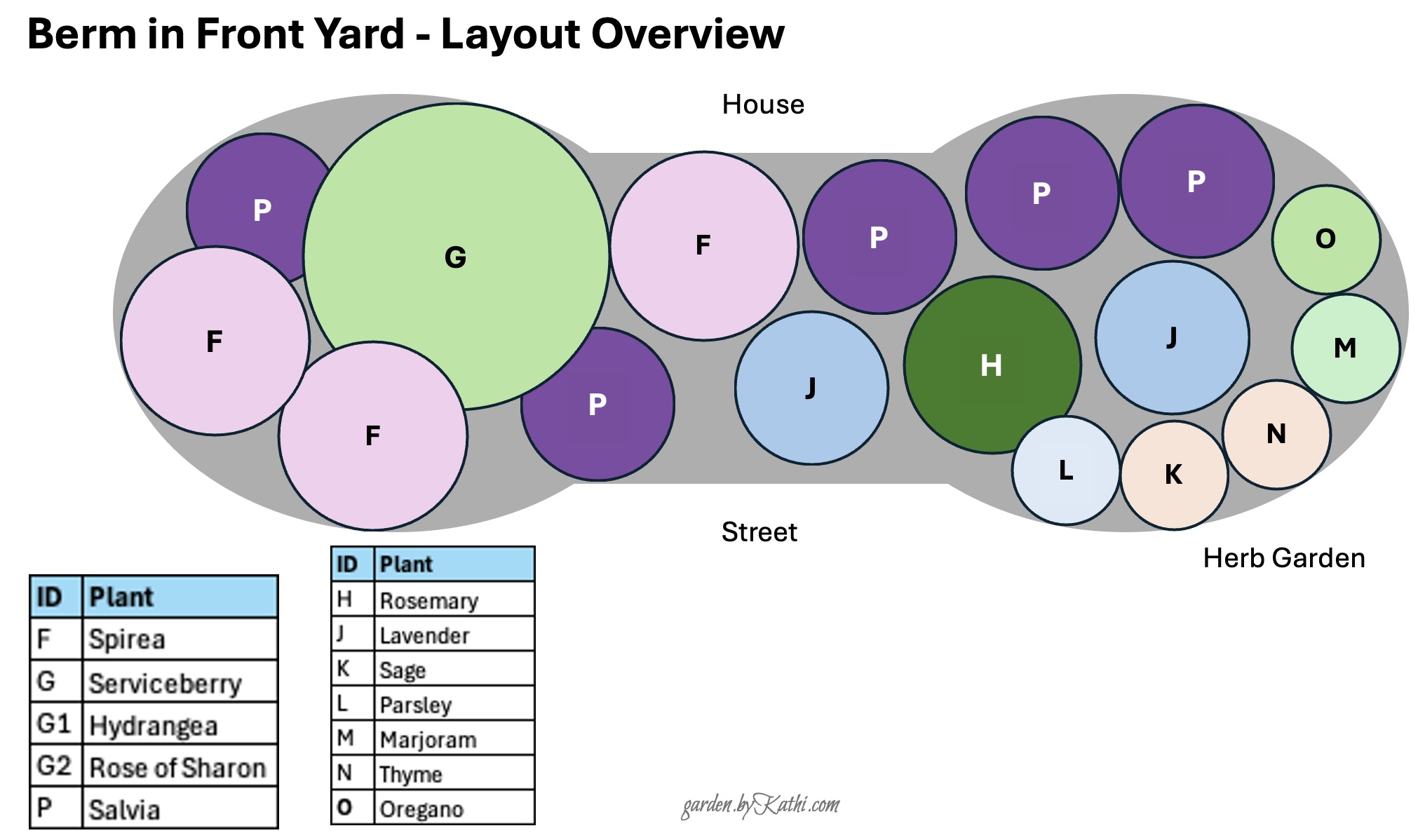
The window deserved a frame, not a screen. Something narrow and upright that would draw the eye upward without spreading across the glass. Something with presence in every season, not just the weeks it happened to bloom. Something that gave back to the garden and to the birds instead of just taking up space.
Serviceberry ‘Standing Ovation’ was the answer. It earns its place twelve months a year. White flowers in early spring before almost anything else is awake. Small dark berries in summer that the birds find before you do. Fall color that shifts from gold to orange to deep red depending on the light and the day. And in winter, a clean branching silhouette against the sky, the kind of structure that makes a bare bed look intentional rather than abandoned.
It stays narrow. It does not spread. It does not sucker or seed into the lawn. It simply does its job with quiet consistency, which is exactly what you want in a focal plant for a bed that already has a lot going on.
The Herb Garden
The right half of the berm was where I got to do something I loved. The whole project was a surprise for her parents while they were away on an extended trip. Her mother is Italian and loves to cook. That detail changed everything about how I thought about that section of the berm.
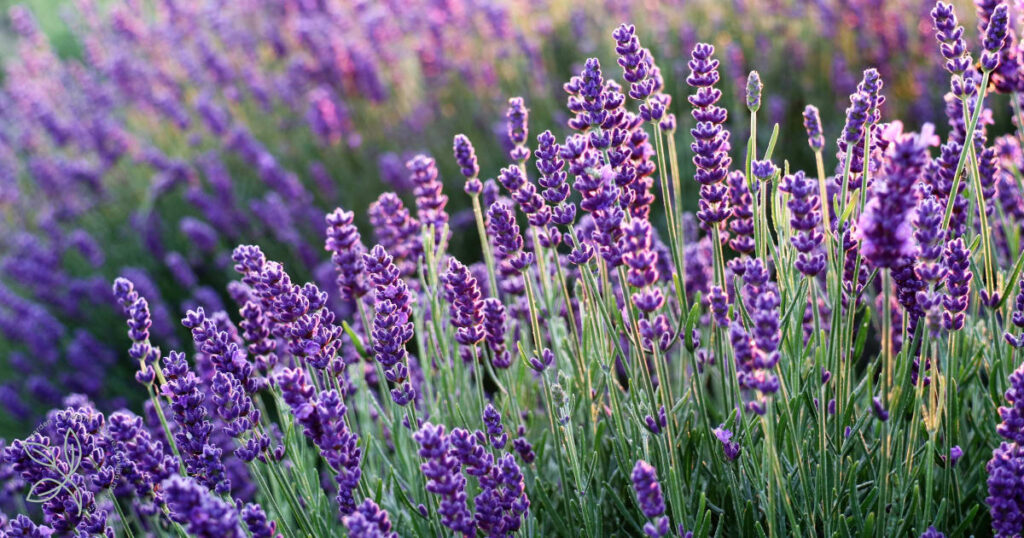
A Mediterranean herb garden made perfect sense. Not a utilitarian row of plants in labeled pots, but something beautiful, a proper garden that happened to also be useful. Rosemary as the centerpiece, because it has the height and the presence and the fragrance that makes you stop when you walk past it. Blue Marvel Salvia and Phenomenal Lavender creating soft layered purple on either side, the silvery texture of lavender leaves contrasting with the darker green of salvia. Sage, thyme, oregano, marjoram tucked in around them, herbs that are generous with their fragrance and honest about what they need, which is mostly sun and decent drainage and a little restraint with the watering can.
The vision was a section of the berm that looked like it belonged in the Italian countryside and also stocked her mother’s kitchen all summer. A place that rewarded the eye and the nose and the evening pasta.
I have to be honest about what I have learned since: rosemary is a tender perennial in Zone 6A. It does not come back reliably. It would have overwintered poorly and needed replacing most springs, which is a fine thing to know before you put it in the center of someone’s herb garden. If I were writing this plan today I would put lavender in that center spot instead, or a compact ornamental sage that earns its place as both structure and harvest.
The rosemary still belongs in the plan. It just belongs in a pot you can bring inside.
The Part That Didn’t Happen
We started the backyard design and it got to be a lot. Life intervened, as it does, and the berm never got planted beyond what was already there. The Serviceberry is still just a circle on a bubble diagram. The herb garden exists only in a PDF on my computer.
I hope the spirea is still mounding the way it was. The iris are almost certainly still there, too established to go anywhere. I hope someone eventually dealt with the Rose of Sharon.
I think about the herb garden sometimes when I am cooking. About what it would have meant for her mother to come home to that front yard, to step outside and cut a few stems of something fragrant that someone thought to plant specifically for her. There is a particular kind of generosity in designing a garden for someone else’s life. You will not be the one to tend it or harvest from it or walk past it on a Tuesday morning. You just get to imagine them doing those things, and hope the plants cooperate.
The berm taught me that good bones are worth the time it takes to find them, that one plant in the wrong place can hold a whole design back, and that a Serviceberry is almost always the right answer when you need something to carry a space through all four seasons without drama.
I still think it would have been beautiful.
Want to see what the full plan looked like? The complete multi-bed design package — bubble diagrams, plant photos, a detail table, and a shopping list — is a free download. Get the full plan here.
Affiliate Disclosure: Some of the links in my posts are affiliate links. That means if you choose to click or buy, I may earn a small commission at no extra cost to you. These links help support the ongoing work of growing, testing, and sharing that I do in this space.