Study Details
- Topic: Intentional use of evergreens as structural design elements in the garden — the plants that hold form and presence when everything else fades.
- Source Material: Personal observation supported by field notes, previous essay “What We Mean When We Say Evergreen,” and practical research on species selection and seasonal timing.
- Learning Approach: Hands-on evaluation of evergreen behavior through winter — tracking which forms, sizes, and placements maintain structure and composure under real garden conditions.
By January, the garden looks like a pause: bare stems, frozen soil, and the one patch of green that refuses to quit. That is where the work really shows. The evergreens keep their shape, softening corners and holding the structure together until the growing starts again.
These plants are the quiet scaffolding of the garden, the ones that stay when everything else is temporary. They are not decoration; they are design. They hold the space steady without demanding attention, doing their best work when no one is watching.
Using Evergreens Intentionally
When you plant to hide or frame something, it is easy to think only about coverage. But someone may still need to reach what you are hiding, whether that is a utility box, a meter, or a foundation vent. The best evergreens are practical as well as beautiful. They know how to stay in their lane.
Size, shape, and spacing all matter. A compact, low-maintenance shrub will almost always serve better than one that sprawls. I learned that lesson the hard way. The first time I planted a fast-growing juniper to screen a hose bib, it swallowed the faucet before the season was over. These days, I choose plants that grow in proportion to the job, not beyond it.
Evergreens can do more than hide; they can frame and ground. A small rounded shrub near the base of a porch column ties architecture to earth. A taller, conical form can draw the eye toward an entry or garden feature. The key is to think of them as punctuation marks, not walls.
Choosing Shape, Color, and Form
I love green, but I do not want a yard filled only with needles and monotone hedges. Some conifers shift to bronze or rust tones in winter, colors that can look warm to some but dull to me.
That is why I lean toward evergreens that offer subtle variation in texture or tone without feeling fussy. Cryptomeria, especially the ‘Globosa Nana’ variety, is one of my favorites. It is soft-needled, lush, and practically glows with new growth. Broadleaf evergreens like Pieris and Rhododendron hold their green year-round and bring structure without the austerity of needles.
Most homes, mine included, are a geometry of lines: square windows, straight rooflines, rectangular beds. Rounded evergreens bring softness and balance. They interrupt the grid in a way that feels intentional. If I had arched windows or a curved path, I might lean toward columnar forms instead. That is the beauty of evergreen planning; you get to choose what works.
Finding the Right Fit
Searching for evergreens can feel endless. Type “evergreens for shade” into a browser and you will find hundreds of options, helpful only if you already know exactly what you want.
Most of us are searching for something more specific: a plant that fits the light, the space, and our tolerance for maintenance. Maybe it is part shade, three to five feet tall at maturity, with a globe-like shape to soften angular lines. Maybe it needs to resist rabbits or thrive on neglect.
That is when I turn to tools that help narrow the field. Sometimes that is my own notes; other times, it is a conversation with ChatGPT. Not because I cannot browse nursery lists, but because I want suggestions that match my constraints and my rhythm of care. Gardening, after all, is as much about fit as it is about beauty.
Planting in Rhythm
Spring and fall are the best windows for evergreens, depending on your climate and goals.
Fall planting is often ideal. Cool air, warm soil, and gentle rain give roots time to settle before freezing temperatures arrive. In most regions, mid-August through early October is the sweet spot.
Spring planting works too, as long as you wait until the soil is workable and the worst of the frost has passed. The growing season ahead gives your new evergreen a strong start before winter.
I avoid summer planting unless I am prepared to water diligently and watch for stress. Winter planting is rarely worth the effort. Frozen ground stops roots from establishing and locks moisture out.
Quick Guide:
- ✅ Fall (ideal): Mid-August–early October
- ✅ Spring (strong): Once soil is workable
- ⚠️ Avoid: Summer heat or frozen winter ground
Choose your moment like you choose your plants: with intention.
Evergreen Shrubs That Work
Here are a few of the best evergreen shrubs for real gardens that I have found. These plants have earned their place over time, steady, structured, and quietly beautiful. Their non-pine look appeals to me. They add softness that pairs easily with the Cryptomeria, Blue Spruce, and Cypress in my yard. I love how their texture complements what is already there, adding variety without noise.
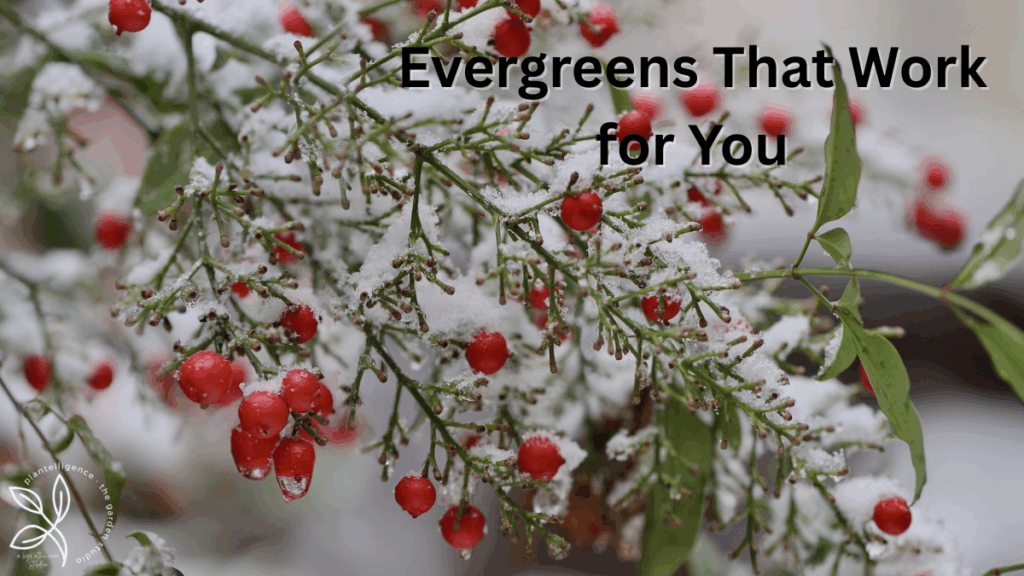
A few of these evergreens do more than hold form. Inkberry and Skimmia offer berries that feed birds through the winter, while others provide early nectar or quiet shelter when little else is alive in the garden.
- Pieris japonica – Tiered foliage with delicate spring flowers. Grows 3–6 feet tall, prefers partial shade, and blooms in early spring.
- Skimmia japonica – Evergreen and shade tolerant, with quiet presence. Slow-growing, thrives in moist, acidic soil, and offers red berries on female plants.
- Rhododendron – Broadleaf evergreen with showy spring blooms. Loves partial shade and humus-rich soil, providing early nectar for bees.
- Boxwood (Buxus) – Naturally globe-shaped and easy to maintain. Tolerates pruning well, grows in sun or shade, and serves as reliable garden architecture.
- Inkberry (Ilex glabra) – Native, dense, and quietly graceful. Reaches 4–6 feet, handles wetter soils, and its berries feed winter birds.
- Cryptomeria ‘Globosa Nana’ – Rounded, soft-needled, and low-fuss. Slow-growing and compact, ideal for structure without height.
These are not catalogue-perfect plants; they are the ones that hold their shape through weather, pruning, and time. They are the plants that actually work.
Closing Reflection
Evergreens are not only about color. They are about constancy, the calm structure that remains when everything else fades. In a world that prizes what blooms and changes, there is quiet satisfaction in the things that stay.
When I look at my evergreens in January light, I see the same promise I wrote about in What We Mean When We Say Evergreen: stability, patience, and the comfort of care that lasts.
The garden rests, the evergreens hold, and everything else waits its turn.
If this practical guide makes you want to see the quieter meaning behind it, read What We Mean When We Say Evergreen, the reflection that started this conversation.
Notes from the Field
- April 2025: Transplanted inkberries from a poorer bed to the chimney garden for better soil and drainage. The move went smoothly, and all plants appear to be settling well.
- September 2025: Relocated the Woodwardii junipers to their final positions after panel installation. They’ve been moved twice before and show some transplant stress; one of the three may not recover.
Affiliate Disclosure: Some of the links in my posts are affiliate links. That means if you choose to click or buy, I may earn a small commission at no extra cost to you. It helps support this site and the ongoing work of growing, testing, and sharing what I learn here.