Experiment Details
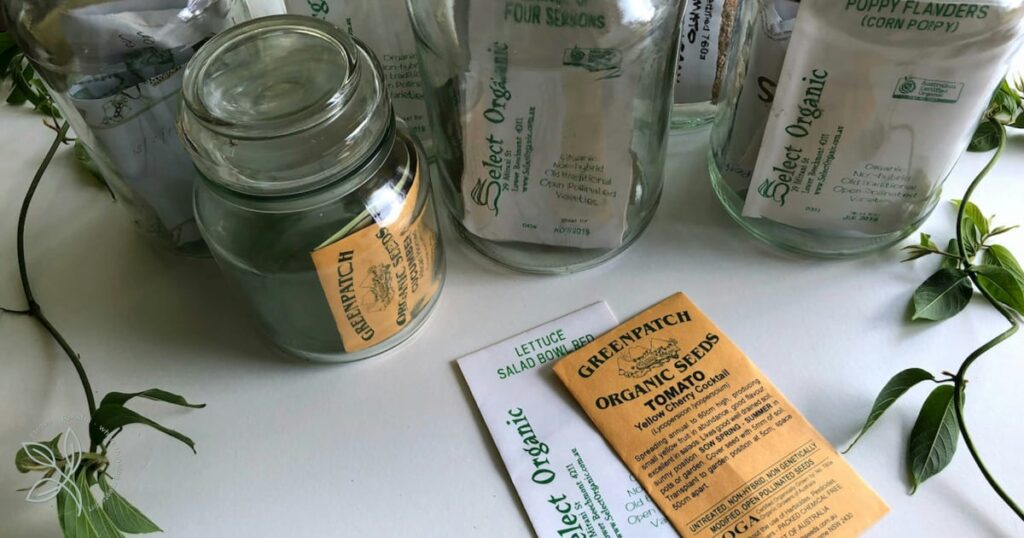
- Experiment: An experiment in fall sowing: I scattered cold-stratification seeds across several beds to test whether old saved seeds can still germinate. Spring will reveal the results.
- Expectations: Expectations are low on purpose. This isn’t about perfection or performance; it’s about finding out what’s still alive in that seed stash and what chooses to return.
What Sparked My Curiosity
I found myself standing in the garden in late November with a bag of decade-old seeds, wondering how anything ever managed to grow before humans got involved. If seeds require this much planning and precision — cold stratification, careful spacing, labeled rows — how did entire ecosystems survive without us? The question felt absurd the moment I thought it, which made me want to test it.
I have been keeping seeds for more than twenty years, some saved for sentiment, some for practicality, and some I cannot even explain. It occurred to me that if I am going to keep storing them, I should finally find out whether any of them are still capable of growing. The question was not how to create perfect germination. The question was whether there was any life left in these seeds at all — and whether, left to their own devices, they already knew what to do.
Where I Started (and Why)
I began this fall, during those cool, workable afternoons when the leaves have settled and the soil is soft enough to disturb without effort. Every seed I chose for this round was one that benefits from cold stratification. Poppies, bachelor buttons of unknown age, the older scabiosa seed saved from a local grower’s bouquet, and the various wildflower packets that have followed me through several moves all went into this category.
The timing mattered because this is how these seeds behave in nature. They fall in autumn, sit through winter, and wake up when the soil tells them it is time. If any of these older seeds still have a spark, this is the moment they will respond to. I scattered them in the named beds where I wanted color — the Bears Bed, the back corners — but also in the margins. The edge of the woods where the soil is thin. Under trees that drop their leaves early and create their own mulch. Places I would never deliberately plant anything precious, which made them perfect for a test I was not sure would work.
My Approach This Fall
I kept the approach simple. I lightly raked the soil in the areas where most of the seeds were going, except for the poppies which need direct light to germinate. I pressed everything into place so the wind or squirrels would be less likely to carry it off. I did not map anything. There is no diagram for this phase. The goal was simply to give each seed some contact with the soil, cover the ones that required it, and let winter do the rest.
The groupings were loose but intentional. In the Bears Bed, I gathered anything labeled blue or close to it — bachelor buttons, two kinds of scabiosa, and a few poppies I suspect will lean red — around the existing orange daylilies and creeping thyme. The rest went into quieter corners. Behind hostas, between the cryptomerias, around the heuchera, along the thinner soil at the back edge of the yard. If they come up strong, they have space. If they appear weak, they are hidden. If they do not come up at all, they have finally had their chance.
How I Divided the Experiment
The experiment has two parts. The fall round is the cold stratification phase. Every seed that went in the ground this fall either requires winter or benefits from it. These are the great unknowns, especially the oldest ones. Some packets were labeled 2003. If they do not germinate, they probably should have gone in the trash a long time ago anyway. This way, at least they get their shot.
The spring round will use the seeds that do not require cold — the tithonia, the fresh bachelor buttons I did not want to risk on a fall gamble, and the newly purchased scabiosa packets bought because I could not trust the bouquet seeds alone. These will be tucked in once the weather settles, completing the second half of the experiment.
What I Am Noticing
Right now? Nothing. And that is exactly what I expected. The seeds are out there somewhere under fallen leaves and light dustings of snow, doing whatever it is seeds do when left to their own devices. Waiting. Resting. Responding to moisture and cold in ways I will never fully understand. I have no idea which ones landed in favorable spots and which ones are already being carried off by birds or rodents.
What I am noticing is how little I am tempted to check on them. There is nothing to check. No trays to monitor, no grow lights to adjust, no labels to reference. The experiment has already left my hands. The seeds are either doing what they need to do, or they are not. Spring will tell me which.
I am also noticing how different this feels from my indoor seed starting, which begins in February and requires constant attention — heat mats, humidity domes, careful monitoring. These seeds get winter. They get to experience the real conditions they would have encountered if they had fallen naturally from a parent plant. I do not know yet if that makes a difference, but I suspect it might.
Where It Leads
In spring I will see which seeds survived the winter and which ones stayed dormant forever. After that, I will begin the spring round for comparison. The purpose is simple: I want to know if the oldest seeds I own can still become plants, and whether they knew enough — without my help — to find the right moment.
If this works, even partially, I plan to do it again next fall with fresher seeds to see if age was a limiting factor. I am also thinking about trying this in slightly more intentional locations rather than scattering everywhere and hoping. But for now, the experiment is out of my hands. The seeds are doing whatever seeds do in winter. And I am doing what I apparently need to do, which is let them.
In My Garden
- Chicago Bears Bed; Back of the Yard Bed; marginal spaces along fence and tree lines.
- Cold stratification seeds scattered among the beds and marginal spaces in October 2025, lightly pressed into the soil with minimal covering.
- Landscapers weed whacked and leaf blew the flower beds in November 2025 — uncertain whether the poppy seeds remain where they were scattered.
- Spring results pending.