Plant Details
- Common Name: Coral Sunset Peony
- Botanical Name: Paeonia lactiflora ‘Coral Sunset’
- Hardiness Zones: 3 – 8
- Height: 2 – 3 feet
- Spread: 2 – 3 feet
- Foliage: Upright deep green foliage that maintains structure through the growing season; herbaceous perennial.
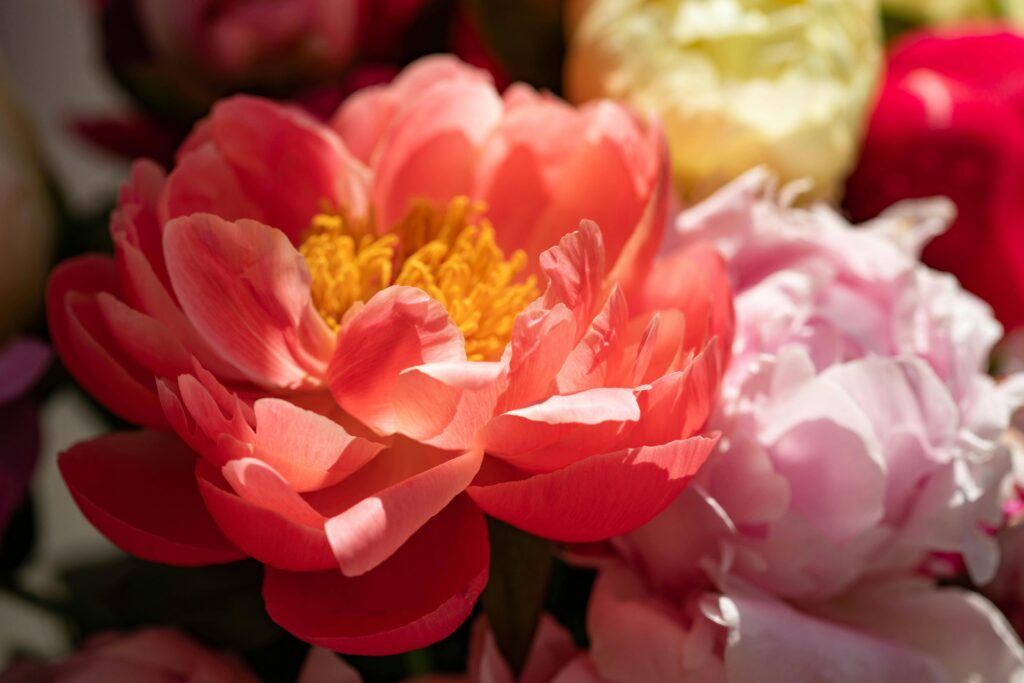
- Bloom: Early season semi-double flowers that shift from coral pink to apricot to ivory; light to faint fragrance
- Growth Rate: Slow to moderate; reliable once established
- Light Requirements: Full sun
- Soil Requirements: Fertile, well drained soil with steady moisture
- Water Requirements: Moderate; prefers even moisture during spring and early summer
- Notable Notes: Blooms fade quickly in heat; heavy flowers may collapse in rain; ant activity common but harmless; benefits from light staking in young years.
coral sunset peony
- Common Name: Coral Sunset Peony
- Botanical Name: Paeonia lactiflora ‘Coral Sunset’
- Hardiness Zones: 3-8
- Height: 2-3 feet
- Spread: 2-3 feet
- Foliage: Upright, neat, deep green; holds shape through season
- Bloom: Early spring; semi-double; coral pink fading through apricot and blush to ivory
- Growth Rate: Slow to establish; long-lived once settled
- Light: Full sun
- Soil: Rich, well-drained; deep planting hole
- Water: Moderate during spring growth
Opening Observation
Peonies have been part of my gardening life for so long that planting a new one feels almost like adding a familiar piece back into the rhythm of a place. In Georgia, they came and went before I had time to enjoy them. The flowers opened in a burst of color and were gone by the next warm afternoon, leaving only the foliage as reassurance that the plant was still there. Planting ‘Coral Sunset’ in Illinois feels different. The soil is steadier, the air cooler, and the spring lasts long enough to notice changes day by day rather than hour by hour. It feels like meeting an old friend in a season where both of us can finally slow down.
What It Is
‘Coral Sunset’ is an early-blooming peony known for its shifting color story. The flowers begin in a saturated coral pink, then soften through apricot and blush before settling into an ivory that looks almost luminous in morning light. The blooms are semi-double and substantial without being unruly. They sit on stems that are strong enough for most weather, although heavy rain can still weigh them down. This plant prefers full sun, moderate water, and soil that allows its roots to settle deeply and stay undisturbed. It is an American Peony Society Gold Medal winner — which for a peony enthusiast is the equivalent of a standing ovation.
Where It Lives
This peony sits in the controlled front border of the Garden Studio, planted as a bare root on October 26, 2025. The spot receives bright morning sun and warms steadily throughout the day. It is close enough to the path that I will see the early foliage as soon as it breaks the soil line in spring. The bed is designed for consistency, which gives me a clearer way to study how this particular variety behaves when the conditions are finally in its favor.
What I Have Learned
Peonies tell different stories depending on the climate. In Georgia, mine taught me how to appreciate beauty while it is right in front of me. I could not wait for a perfect moment because the perfect moment rarely lasted. In Illinois, I see neighbors with peonies that hold their color for days, sometimes even a full week. The flowers keep their shape, and the scent lingers long enough to feel intentional rather than fleeting. Planting ‘Coral Sunset’ is a small test of how environment shapes experience, and whether this variety will finally have time to show all the stages it is known for.
What It Does (and Why I Love It)
Peonies bring presence to a garden even after the bloom window closes. Their foliage holds a neat, upright shape that plays well with soft edges and steady growers. I can imagine this one paired with a sweep of lady’s mantle, early salvias, or even a low evergreen for contrast. If it performs well, I may add a ‘Sarah Bernhardt’ nearby to create a sequence where the coral tones give way to a softer pink. The ants will arrive as they always do, but they do not harm anything. They are simply part of the experience of growing peonies.
Maintenance Rhythm
Once planted at the correct depth, peonies want very little from us. Moderate water during spring growth helps them settle, and a light stake or hoop can protect the stems during heavy rain. I will add a thin layer of mulch to keep moisture consistent as temperatures rise. The foliage will stay in place until frost, feeding the crown for next year. Division is rarely needed unless the plant becomes crowded, and that usually takes several years.
The Verdict (So Far)
This plant feels like a hopeful choice. It carries the drama of a color-changing bloom and the reliability of a perennial that returns without fuss. What I am most curious about is how long the flowers will last now that the climate works in their favor. If the coral tones hold for even a few days, it will feel like a small victory after years of watching peonies fade too quickly. If the season goes well, this may become one of the markers of spring in the Garden Studio, a plant that helps set the tone rather than simply passing through.
In My Garden
- Planted as a bare root, Garden Studio front border.
- Coming up and looking good this spring. Still early in the season but the plants seem happy. The rabbits have not touched them, which feels like a small victory given how much they seem to enjoy testing everything else in the garden. Looking forward to seeing the full color story play out for the first time.