Plant Details
- Common Name: Dwarf Loropetalum (Chinese Fringe Flower)
- Botanical Name: Loropetalum chinense var. rubrum (dwarf cultivar)
- Hardiness Zones: 7 – 10
- Height: 2 – 3 feet
- Spread: 3 – 4 feet
- Foliage: Evergreen to semi-evergreen; burgundy to deep purple leaves with brighter new growth in sun
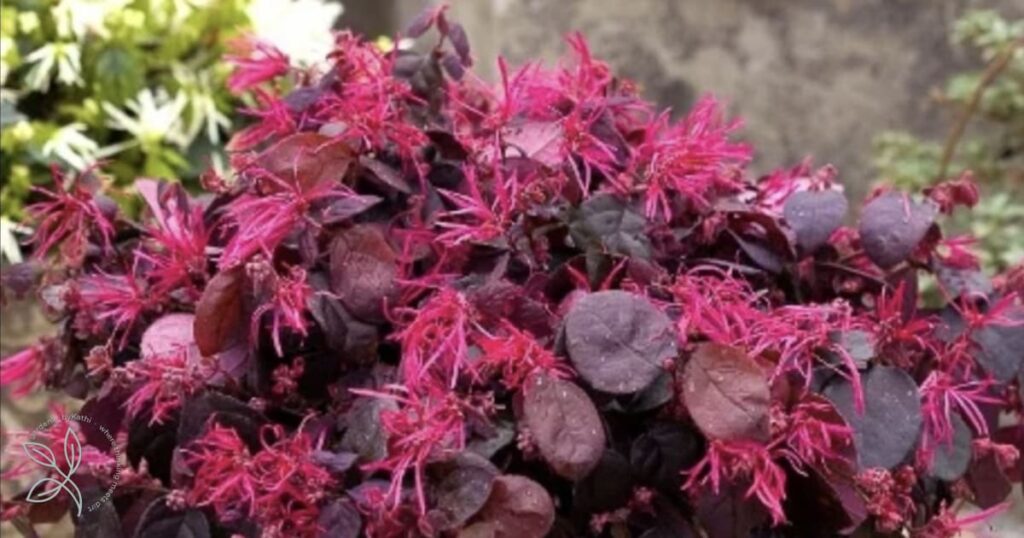
- Bloom: Bright pink, fringe-like flowers in spring with occasional rebloom; light fragrance at close range
- Growth Rate: Moderate
- Light Requirements: Full sun to partial shade; best color in bright light with protection from harsh afternoon sun
- Soil Requirements: Well-drained, acidic soil; amend neutral soils with organic matter or acidifiers
- Water Requirements: Moderate; regular watering until established, then deep, occasional irrigation
- Notable Notes: Deer-resistant; attracts early pollinators; excellent for small hedges or containers in mild climates; not hardy in northern zones
Opening Observation
Loropetalum was one of those plants I first admired from the sidewalk. When we lived in Georgia, I noticed it in front yards all over the neighborhood—rounded shrubs with deep purple leaves and those frilly, pink, firework-like flowers that seemed to appear right around the Fourth of July. I wanted one but didn’t have the space for such a large shrub. When we finally redesigned our front flower bed, I mentioned it to the landscaper, who immediately suggested the dwarf variety. That was a turning point. I got the same lush color and lively texture, just scaled to fit a smaller bed.
What It Is (The Basics)
Loropetalum, also called Chinese fringe flower, is a broadleaf evergreen that brings color and structure to mild-climate gardens. The standard form can grow several feet tall and wide, but the dwarf varieties stay compact—usually under three feet. The foliage is rich and saturated, shifting from burgundy to deep plum depending on light and season. When it blooms, the plant sends out bright pink, fringed petals that look more like ribbons than traditional flowers.
Where It Lives
My dwarf Loropetalum lived in the front beds of our house in Woodstock, Georgia. They enjoyed a mix of morning sun and gentle afternoon shade—just enough light to hold their deep color without scorching in the summer heat. The soil there was naturally acidic, which suited them perfectly. Even during colder spells, they held their leaves and shape, staying neat and colorful through winter when most of the garden went bare.
What I Have Learned
These shrubs impressed me with how reliable they were. They kept their size, filled in evenly, and tolerated both heat and occasional cold snaps. When I trimmed them, even a little aggressively, they rebounded quickly with new growth. Their rounded shape made the beds look tidy without any rigid pruning schedule. The dwarf form in particular never overreached its boundaries—something I appreciate in a front bed where plants are close to the walk. I learned that Loropetalum likes a slightly acidic soil and does best when it isn’t overwatered. Once established, it handled dry weeks just fine.
What It Does and Why I Love It
Dwarf Loropetalum adds a kind of dependable color that makes a garden look composed even when nothing else is in bloom. The leaves alone bring contrast against green or silver foliage, and the flowers add short bursts of brightness that feel celebratory without being showy. I love how it provides that sense of structure without fuss. It feels like a team player in the landscape—steady, cooperative, and always presentable.
Maintenance Rhythm
I pruned lightly after the main bloom to keep its rounded form and removed any awkward branches. Beyond that, maintenance was minimal. I fed with an acid-formula fertilizer once a year and maintained a thin mulch layer to regulate moisture. It never seemed to need babying; it just carried on, season after season, doing exactly what I hoped it would.
The Verdict (So Far)
If I could grow Loropetalum here, I would. The dwarf varieties strike that perfect balance between vibrant and disciplined—they bring life and color without ever demanding attention. In a climate that supports them, they anchor a bed beautifully and reward even casual care with reliable form and seasonal bloom. For me, they remain a reminder of Georgia gardens done right: colorful, steady, and quietly confident. If you’re in a warmer zone and want to try one, Purple Daydream Dwarf Loropetalum is a cultivar worth looking at.
Affiliate Disclosure: Some of the links in my posts are affiliate links. That means if you choose to click or buy, I may earn a small commission at no extra cost to you. These links help support the ongoing work of growing, testing, and sharing that I do in this space.