Plant Details
- Common Name: Buckwheat
- Botanical Name: Fagopyrum esculentum
- Hardiness Zones: 3-10
- Height: 2 to 4 feet
- Spread: 2 feet
- Foliage: Triangular, heart-shaped green leaves with red stems; soft texture
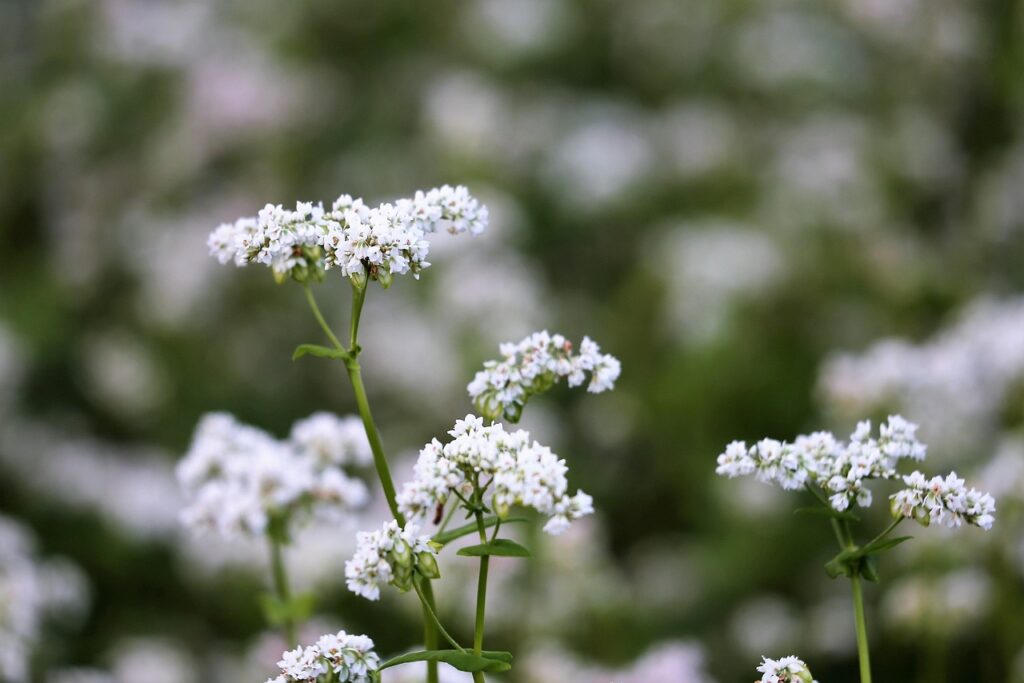
- Bloom: Small white to pale pink flowers in clusters, midsummer if left uncut; annual
- Growth Rate: Fast
- Light Requirements: Full sun to light shade
- Soil Requirements: Prefers well-drained, moderately fertile soil; tolerates poor conditions
- Water Requirements: Moderate; drought-tolerant once established
- Notable Notes: Non-invasive and quick to decompose; improves soil structure and fertility; attracts bees and beneficial insects; effective natural weed suppressor.
buckwheat
- Common Name: Buckwheat
- Botanical Name: Fagopyrum esculentum
- Hardiness Zones: Annual — all zones
- Height: 2-4 feet
- Spread: Varies by seeding density
- Foliage: Heart-shaped green leaves, red stems
- Bloom: Small white flowers, mid to late summer
- Growth Rate: Very fast — germinates in 3-5 days
- Light: Full sun to partial shade
- Soil: Poor to average, well-drained
- Water: Low once established
Opening Observation
I came to buckwheat looking for a helper, not a harvest. The back edge of my yard, where the property meets the easement, has been a quiet mess for years. Between the trees and the buried utility lines, the previous owners obviously left it to its own devices. Burdock, in particular, has taken advantage of the neglect, stretching deep roots into the loosened soil and coming back stronger every time I tried to pull it. This area also holds the underground utility lines, so I did not want to dig too deeply, and I was tired of fighting it. I wanted to know if there was something, a plant, a natural treatment, that could somehow do the hard work for me. Something strong enough to smother what I did not want, but not so aggressive that it became a problem later. That is when I found buckwheat.
What It Is
Despite its name, buckwheat is not a grain. It is a flowering plant in the knotweed family, more kin to rhubarb than to wheat. It grows fast, often within days of sowing, and fills open soil with a lush green canopy that shades out weeds before they can establish. Beneath the surface, its fine roots work to loosen compacted soil, improving texture and aeration without deep disturbance. Above ground, it stays tidy and generous: heart-shaped leaves, tiny white flowers, and a brief bloom that draws bees. When it is finished, it breaks down quickly, returning organic matter to the soil it just protected. For a deeper look at how buckwheat performs as a cover crop in home gardens, the OSU Extension Service has an excellent practical guide.
Where It Lives
Buckwheat thrives in the spaces most plants avoid: thin soil, limited water, uneven light, ground that has seen better care. In my yard, that means the long stretch along the back fence, dry and silty in places, shaded by neighboring trees in others, with pockets of sun where the canopy opens. It is not a glamorous bed, but it is exactly the sort of place buckwheat seems built for. It does not need coddling. It needs a place to work.
What I’ve Learned
Buckwheat teaches speed and surrender in equal measure. It germinates almost before you can step away, grows evenly, and fills its space with quiet purpose. Its success feels earned but not labored. Restoration does not always have to start with struggle; sometimes the best approach is to step back and let something simple do what it is designed to do.
Maintenance Rhythm
For my purposes, I do not want buckwheat to self-seed, so I sowed late in the season, just ahead of frost. The goal was a full green cover that smothers burdock and leaves fine roots to improve the soil. By the time cold weather arrives, I let it die back naturally and use the green material as compost in place. During my Master Gardener interview, an instructor confirmed that timing is key: cutting or turning it before it flowers keeps it from reseeding and creating a new problem. Knowing it is an annual, I count on frost to finish the job, leaving the root system to do what it does best, loosen, enrich, and quietly reset the ground.
The Verdict (So Far)
Buckwheat is doing exactly what I needed it to do, holding the line. The dense canopy has kept burdock from reemerging and blocked out the smaller invaders that try to slip in before frost. This stage is not about beauty; it is about interruption, about stopping anything else from taking hold before winter does its work. If buckwheat keeps the soil covered and quiet until the cold sets in, it will have done its job perfectly.
In My Garden
- Seeds purchased on Amazon (affiliate link). Utility Garden and Panel Beds.
- Scattered seed along the back property line in September 2025, lightly raked to cover. Within weeks, tiny red stems and bright heart-shaped leaves had formed good coverage across the bed.
- My garden crew cut everything down during fall cleanup. They had never seen it before and did not know it was intentional. The timing was not ideal either, a cold snap followed shortly after. The result? Buckwheat came back on its own this spring, volunteering all through the bed. I did not plan for it, but I am not unhappy about it.
- Planning to sow again intentionally at the end of this season, and considering running it along the panel beds as well, where brush encroaches from the neighboring property. If buckwheat can hold the line there, that would be a quiet victory.
Affiliate Disclosure: Some of the links in my posts are affiliate links. That means if you choose to click or buy, I may earn a small commission at no extra cost to you. These links help support the ongoing work of growing, testing, and sharing that I do in this space.