Plant Details
- Common Name: Artemisia ‘Silver Mound’ (wormwood)
- Botanical Name: Artemisia schmidtiana ‘Silver Mound’
- Hardiness Zones: 3-8
- Height: 12 inches
- Spread: 18–24 inches
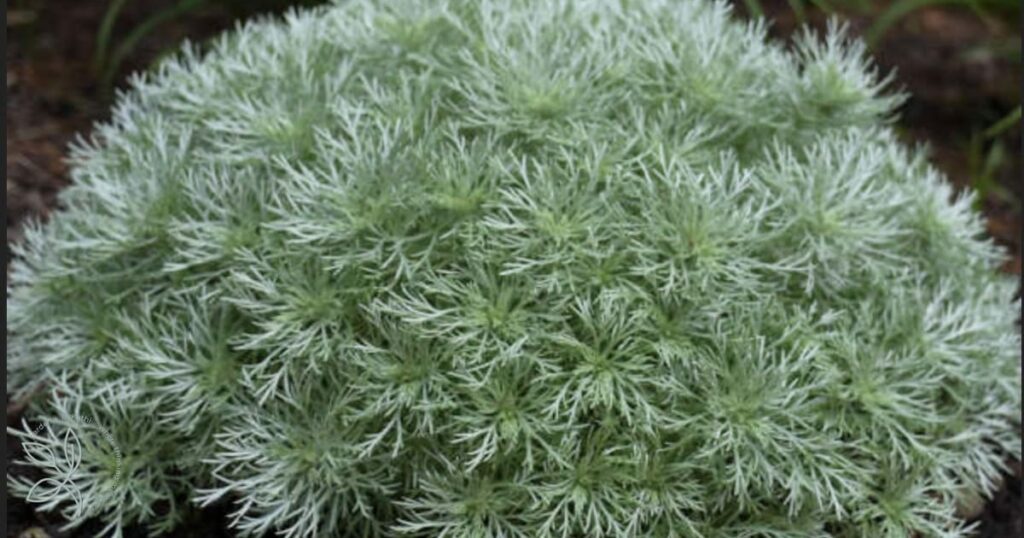
- Foliage: Silvery-green, finely textured, and soft to the touch. Perennial foliage that provides season-long color and contrast.
- Bloom: Rarely blooms; when it does, small pale-yellow flowers appear in early summer but are generally insignificant compared to the foliage.
- Growth Rate: Moderate
- Light Requirements: Full sun; tolerates light shade but becomes looser in form.
- Soil Requirements: Prefers well-drained, sandy or average soil; does poorly in heavy, wet, or clay conditions
- Water Requirements: Low; drought tolerant once established and dislikes overwatering
- Notable Notes: Resistant to deer and rabbits; aromatic leaves; mildly toxic if ingested; historically associated with absinthe; may deter certain garden pests such as slugs, snails, and cabbage moths.
Opening Observation
Artemisia ‘Silver Mound’ was the first plant that taught me about companion planting — even before I knew that was what it was called. I found it years ago in Better Homes and Gardens’ Gardening Naturally (1993), a book that introduced me to the idea that some plants could quietly protect others, deterring pests without chemical intervention. Wormwood, it said, repelled cabbage moths, flea beetles, and slugs. I loved the concept instantly and told everyone I knew. I’m sure seasoned gardeners smiled politely while I shared my revelation, but I didn’t care. I went straight out and found wormwood, brought it home, and marveled at its softness — a living defense system that felt like silver lace.
What It Is (The Basics)
Artemisia ‘Silver Mound’ is as beautiful as it is practical. It forms soft, silvery-green domes of finely cut foliage, dense but airy, like mist caught in sunlight. The leaves are feathery, tactile, and shimmering in motion. It rarely flowers, but it doesn’t need to; its form and texture carry the season. Typically, it stays around a foot tall and spreads twice as wide, happiest in full sun and dry, well-drained soil. Silver Mound dislikes rich earth or heavy watering. Give it breathing space and a little neglect, and it thrives.
Where It Lives (In My Garden)
In my yard, Silver Mound plays the role of calm amidst color. Five plants anchor the edge of the garage garden in front of the Japanese maple, their cool tone setting off the deep burgundy behind them. Another grouping lives beneath the living-room window, where they sit between globe arborvitae and oakleaf hydrangea ‘Munchkin.’ In both beds, they act as quiet punctuation — a soft pause before the next flourish.
What It Does and Why I Love It
Every garden needs something steady, something that holds the middle without needing applause. Silver Mound is that plant. It creates coherence and balance, turning contrast into composition. I love that it’s both beautiful and functional — soft to the touch yet purposeful, elegant but unpretentious. And knowing that wormwood’s history includes its use in absinthe just adds to its character: a gentle plant with a complicated past.
Maintenance Rhythm
Silver Mound asks for very little. I trim lightly in spring and again after its brief bloom to keep it tidy. Overwatering will make it sulk and sprawl, so restraint is the best care. It thrives when ignored — a humbling reminder that nature often does better without us hovering.
The Verdict So Far
I’d plant it again without hesitation. It’s timeless, forgiving, and quietly architectural. I plan to test its rumored pest-deterring powers next year by tucking a few near the brussels sprouts to see if it really keeps the cabbage moths away. Either way, it earns its place. You can find Artemisia ‘Silver Mound’ at Nature Hills.
Notes from the Field
- Early 2000s: First planted a single Silver Mound after reading Gardening Naturally. Never saw it in stores again for years afterward.
- September 2025: Newly installed by landscaper; thriving from the start. Excellent contrast and form.
Affiliate Disclosure: Some of the links in my posts are affiliate links. That means if you choose to click or buy, I may earn a small commission at no extra cost to you. These links help support the ongoing work of growing, testing, and sharing that I do in this space.