Plant Details
- Common Name: Hydrangea ‘Berry White’
- Botanical Name: Hydrangea paniculata ‘Berry White’
- Hardiness Zones: 3–8
- Height: 6–7 feet
- Spread: 4–5 feet
- Foliage: Medium green, oval leaves with a lightly serrated edge; smooth to the touch and dense enough to provide structure through the growing season. Leaves turn a muted yellow-green in autumn before dropping.
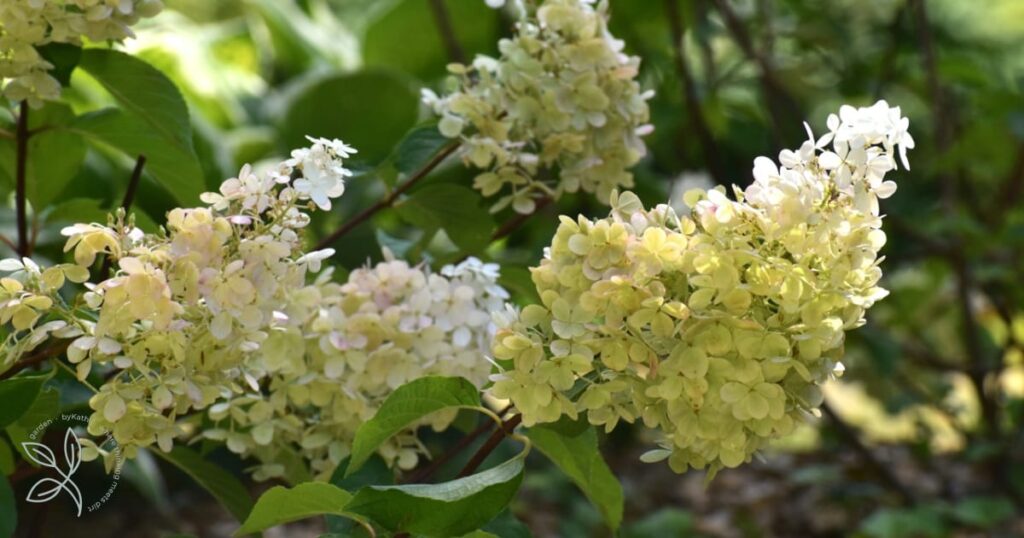
- Bloom: Large, upright panicles up to 12 inches long; florets open creamy white in mid-summer, gradually shifting through soft rose to deep raspberry pink by early autumn.
- Light Requirements: Full sun to part shade
- Soil Requirements: Rich, well-drained soil preferred; tolerates a range of garden conditions with adequate moisture
- Water Requirements: Consistent moisture, especially during establishment; moderate tolerance once rooted
Opening Observation
I had admired panicle hydrangeas for years without realizing what they were. From a distance, the cone-shaped blooms looked like a cross between hydrangea and lilac, familiar but not quite. I would see them in the neighborhood, pale and upright, some bright white, some tinged green, some fading to pink, and think they must be something else entirely. I admired, then moved on. I was, and still am, a seasoned gardener, but also a hydrangea (macrophylla) purist. Still, I was sure it could not be a hydrangea.
Well, even people more seasoned than I make mistakes. It absolutely is a hydrangea, just a variety I had not seen before. When I spotted one at Pasquesi’s nursery, the recognition hit immediately. I brought home ‘Berry White’ that same day, a late-season find that felt like the punctuation mark my side patio garden had been missing.
What It Is (The Basics)
Panicle hydrangeas are the architectural cousins of the classic mophead varieties, upright, elongated, and sturdier by nature. They handle more sun and colder winters than most of their relatives, thriving where other hydrangeas sulk.
With this variety, Berry White, the blooms open creamy white in mid-summer, then blush gradually through rose and raspberry before fading toward a muted, papery pink as autumn settles in. The change is subtle, more like aging than transformation, a quiet softening rather than a show of change.
The stems are strong and balanced, built to hold large blooms without flopping. The plant prefers consistent moisture and benefits from a bit of morning sun, though it tolerates partial shade better than most. Mature height ranges from six to seven feet, giving it presence in a border without overpowering what is around it. It is a plant that looks composed even in neglect, a trait I have come to admire more each year.
Where It Lives
Mine stands at the far end of the side patio garden, anchoring the corner where the pavilion post meets the lawn. A downspout nearby keeps the soil evenly moist, and though the spot looks open, it spends most of the day in shade, just an hour or two of filtered light, maybe enough for the basil to survive on optimism alone.
That corner behaves like its own small ecosystem. The hydrangea acts as a visual stop, a steady structure against the looseness of everything else. When it rains, water hums down the spout beside it, and the whole space takes on a soft, cool quiet. I see it from the kitchen window, from the patio table, from the path where I pause without realizing I have stopped. It is not loud, but it holds its place with quiet authority.
What I Have Learned
This was its first full season, so I let it grow as it pleased. Even with limited sun, it bloomed generously, not lush but steady, and the stems stayed upright through rain and wind. The white flowers did not so much turn pink as fade that way, their texture changing as the season aged. It reminded me that in a garden, color change is not always an act of performance. Sometimes it is just time revealing itself.
What I wish for is more fullness in the shrub, the sense of mass and shape that comes with maturity. It will come, of course, but I am impatient. Gardening has a way of reflecting that back at me. Sometimes, the learning is not about the plant at all; it is about recognizing myself in the waiting.
It is the kind of plant that rewards restraint, the kind that reminds you structure can be a form of trust.
Companionship Notes
When I first planted this bed, I mixed hostas and lavender, a pairing that made sense on paper and nowhere else. The hostas thrived too much; the lavender too little. Both have since been escorted out. In their place, sweet woodruff has crept in at the hydrangea’s feet, threading through the shade and softening the edges.
It is thriving there, which feels like an agreement rather than a coincidence. The woodruff covers ground; the hydrangea holds height. They share the same quiet temperament, each filling the space the other leaves open.
Maintenance Rhythm
This first year was for settling in. I did not prune or shape; I simply observed. Next spring, I will trim lightly to encourage a more balanced form near the pavilion post. The downspout keeps the soil moist, so it is self-sustaining in a way that suits this corner, a little oversight, a lot of observation.
It is the kind of plant that rewards restraint, the kind that reminds you structure can be a form of trust.
The Verdict (So Far)
Even in shade, I love it. It feels rooted and content, even if the color leans darker than I expected. Sometimes I wonder whether a true white variety might have brightened the space more, but then I catch the way this one fades into pink and realize that brightness is not always the goal.
The fading feels earned, the way linen softens with use or light wood deepens with age. It is a plant that marks time rather than demanding attention, a steady punctuation at the edge of the patio where summer lingers just a little longer. You can find Hydrangea ‘Berry White’ at Wayside Gardens.
Notes from the Field
- Summer 2024: First season after planting; moderate bloom despite shade.
- Autumn 2024: Leaves and blooms both turned soft pink; stems sturdy through early frost.
- Spring 2025: Planned light shaping for balance near pavilion post.
Affiliate Disclosure: Some of the links in my posts are affiliate links.
That means if you choose to click or buy, I may earn a small commission at no extra cost to you.
These links help support the ongoing work of growing, testing, and sharing that I do in this space.