Plant Details
- Common Name: Inkberry Holly
- Botanical Name: Ilex glabra ‘Shamrock’
- Hardiness Zones: 4-9
- Height: 3-4 feet
- Spread: 3-4 feet
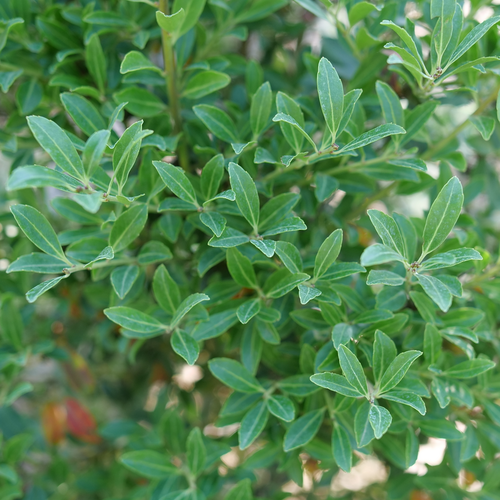
- Foliage: vergreen with small, glossy, dark green leaves; dense and rounded habit
- Bloom: Late spring; small white flowers, followed by inconspicuous black berries that persist into winter
- Growth Rate: Slow to moderate
- Light Requirements: Partial to full sun; tolerates some shade but prefers consistent light
- Soil Requirements: Moist, acidic, well-drained; tolerates clay or sandy soils once established
- Water Requirements: Even moisture; water deeply and regularly during dry spells; dislikes drought or compacted soil
- Notable Notes: Native to eastern North America; excellent structural evergreen; deer and rabbit resistant; provides food and cover for birds
inkberry holly
- Common Name: Inkberry Holly (Shamrock)
- Botanical Name: Ilex glabra ‘Shamrock’
- Hardiness Zones: 4-9
- Height: 3-4 feet
- Spread: 3-4 feet
- Foliage: Dense, glossy, small smooth-edged leaves; stays green year-round
- Bloom: Tiny white flowers spring; black berries persist into winter
- Growth Rate: Slow to moderate
- Light: Part shade preferred; tolerates morning sun
- Soil: Acidic, evenly moist; tolerates occasional wet
- Water: Moderate; consistent moisture
Opening Observation
Some plants earn their keep quietly. Shamrock inkberry is one of them. I first noticed it at Country Bumpkin while hunting for a completely different plant, Ilex crenata ‘Woodwardii’. The tag caught my eye, and a quick bit of on-the-spot research convinced me it might solve a problem I had not quite named yet: I needed structure I could trust. Where boxwoods sulk or yellow, inkberry stays steady. The rounded cultivars like ‘Shamrock’ bring evergreen polish without the stiffness that sometimes makes foundation shrubs feel over-posed.
What Inkberry Holly Is
Ilex glabra ‘Shamrock’ is a compact, native inkberry holly, an evergreen shrub from the coastal plains of the eastern United States. It forms a dense, rounded shape, typically 3 to 4 feet high and wide, with small glossy leaves that stay green year-round. Unlike spiny hollies, its foliage is smooth-edged and neat. Growth is measured but reliable, and the plant keeps its form without much help. Tiny white spring flowers give way to inconspicuous black berries that persist into winter, a quiet food source for birds — though inkberry is dioecious, meaning female plants need a male pollinator nearby to produce those berries. It prefers acidic, evenly moist soil and tolerates occasional wetness better than most evergreens. For full botanical detail, the Missouri Botanical Garden Plant Finder is an excellent reference.
Where It Lives
The two I bought that day started out in the back bed, where they received strong morning and midday sun. They never really settled in, too much exposure, perhaps, and too little consistent moisture. When construction on the cedar panels began, it made sense to move them. The chimney garden offered better light balance and a soil base already improved with compost. Now they flank the chimney itself, anchoring the corners of the center section while the Weigela fills the midline and hydrangeas edge the front. They have grown in well, holding their color and shape without complaint. In a bed where so much is still finding its rhythm, the inkberries give the whole composition weight and calm.
What I’ve Learned
Inkberry does not rush. It grows with quiet confidence, the kind that comes from being well-suited to its place. In the right soil, slightly acidic, evenly moist, and given time, it forms a tidy mound that looks good in every season. The key is balance: too much sun and the leaves can bronze or drop; too much shade and the center can thin. In the chimney garden, where the light softens in the afternoon, ‘Shamrock’ seems perfectly at ease. It is one of those plants that teaches restraint: amend the soil, water deeply, then mostly leave it alone.
I have learned that it responds to consistency more than fussing. A light mulch each spring keeps the moisture even and the soil cool. It does not ask for pruning, and if you resist the urge to shape it, it rewards you with a natural, rounded form that holds its edges through the year. Deer have shown no interest so far, and neither have the rabbits, which feels like a small gift.
Companionship Notes
The inkberries now sit at the heart of the chimney garden, one on each side of the chimney, steadying the center section that ties the whole bed together. Their dark green foliage anchors the space and creates a visual pause between the flowering layers, Weigela in the middle, hydrangeas at the front, Sweetbox and Pieris in the wings. Together, they make the garden feel intentional rather than busy.
Even though they are the structural element, they do not read as formal. The rounded shape softens the brick and balances the seasonal energy of everything else. When the hydrangeas bloom, the inkberries give them something to lean against visually; when the garden goes quiet in winter, the evergreens hold the rhythm.
Maintenance Rhythm
Inkberry might be one of the lowest-effort shrubs I grow. It likes routine: consistent moisture, a light top-dressing of compost, and little else. I water deeply every week or so through the heat of summer, then let rainfall handle the rest. I do not feed it beyond the compost, and I do not prune except to remove the occasional stray branch in spring. Its growth rate is slow enough that there is never a sense of catch-up.
The only real attention it needed came early on, when I realized the first site was too exposed and the soil too dry. Once it found a better balance, the plant settled in and started behaving exactly as promised. Sometimes that is all a reliable evergreen needs, a spot that matches its temperament.
The Verdict (So Far)
Inkberry has earned my trust. It has become the quiet backbone of the chimney garden, steady and consistent without asking for attention. It fills the role I once expected boxwood to play, structure without drama, evergreen presence without the sulk. Where boxwoods yellow and need coaxing, inkberry simply stays green and does its job.
I do not think of it as a showpiece, and that is the point. It is the plant that lets everything else make sense. I will likely add more of them once the rest of the garden settles and I can see where that kind of reliability belongs. For now, ‘Shamrock’ is exactly what I needed, an evergreen I can count on. If you want to order online, Gem Box inkberry is a related compact cultivar worth looking at. If you are looking for more evergreen shrubs that earn their place, I have a full guide to the ones I trust most.
In My Garden
- Purchased from Country Bumpkin. Started in the back bed; moved to the chimney garden when the cedar panels went in.
- Doing well in the less direct sun against the house. Dropped some lower leaves and has not filled out the way I hoped yet, but inkberry transplants reliably and seems sturdy enough to handle being relocated. Which is good, because I move plants like furniture. These ones are staying put.
Affiliate Disclosure: Some of the links in my posts are affiliate links. That means if you choose to click or buy, I may earn a small commission at no extra cost to you. These links help support the ongoing work of growing, testing, and sharing that I do in this space.