I signed up for a community garden plot with the idea that it would be quiet. I pictured myself slipping in with my tools, putting my earbuds in, and tending the soil without needing to say a word to anyone. Gardening has always been a place where I can work things out in my head, and the thought of a small plot away from home felt like a welcome pocket of solitude. Instead, that season unfolded as something far more textured. It became a patchwork of many gardens, many choices, and many moments of quiet curiosity that reminded me why I have loved growing things for most of my life.
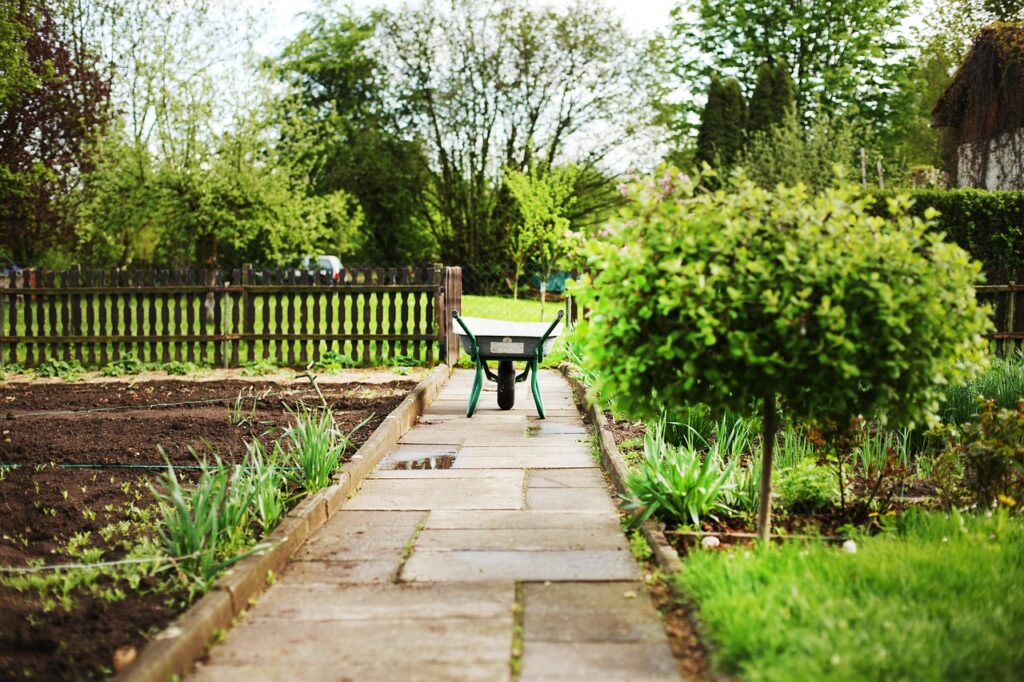
The garden itself sat in long rows, each plot marked out by wooden stakes and framed by paths of wood chips. From a distance, the whole place looked loosely assembled, the way quilts sometimes look before the edges are bound. Each gardener arrived on their own schedule, tending when they could, which meant the garden was rarely busy. Most days there were only one or two people scattered throughout, working quietly. It was calm in the way shared spaces often are when no one is trying to fill the silence.
I learned quickly that earbuds are a poor strategy in a community garden. The moment I knelt down, someone nearby would call out a greeting or ask what I was planting. I would try to hook an AirPod with the tips of my gloves, fail, peel the gloves off with a little muttering, and usually end up with grains of dirt lodged in my ears by the time I got home. It is impossible to conduct yourself with any grace when your hands are sweaty and your gloves are damp with soil, but those small interruptions became part of the rhythm. They were gentle reminders that I was not gardening alone, even if that had been my plan.
The Patchwork Itself
What stands out most about that season is how differently every gardener approached their plot. Across forty beds, I saw forty interpretations of what a garden could be. Some planted with careful geometry, straight rows and evenly spaced seedlings. Others allowed plants to wander. Herbs spilled across borders, squash vines reached toward open pathways, and tomatoes leaned into sun wherever they found it.
One gardener planted okra. I noticed it every time I walked past. It grew tall and elegant, pods tapering into neat points, most of them left unpicked. Whether they meant to harvest it or simply wanted to try growing something new, I do not know, but watching it develop felt like a small privilege. Not everything in a garden is meant to be brought to the kitchen.
The variety extended beyond the plants themselves. Some gardeners started from seed, waiting with the kind of patience gardeners know well as tiny green loops pushed through the soil. Others brought in mature plants that filled entire sections in an afternoon. It was fascinating to see the contrast. Seedlings look like a promise. Mature plants feel as if someone has already vouched for their reliability. There is room for both in a place like this.
I found myself studying these differences in a way I had not expected. After decades of gardening, none of these choices surprised me, but seeing them side by side made the familiar principles feel newly present. A community garden is a rare chance to see, all at once, how many ways there are to shape the same small square of land.
My Own Small Square
My plot was a mix of practicality and curiosity. The soil was tired and compacted, something I noticed right away. I had planned to pick up compost from the Master Gardeners spring giveaway, but the timing never aligned, and I knew better than to expect exceptional performance from soil that needed more nourishment than it had been given. Even so, gardening is often about doing the best you can with what you have, and I planted with that in mind.
I grew beans in three colors. They are reliable plants, generous even when conditions are less than ideal, and they did exactly what beans tend to do. They climbed steadily and produced well, enough that I found myself imagining where I might grow them in our yard once we finally began shaping the new beds at home. I planted beets, too, because I love them fresh, and even though they came in small, they tasted wonderful.
And I planted brussels sprouts, a first for me in a community plot. They grew slowly and steadily, forming tight spirals along their stalks. At the end of the season, when the garden closed, I dug them up and brought them home, only to lose them to cabbage moths. Sometimes gardening hands you the lesson you were avoiding, even when you know better.
These details may seem ordinary, but they formed the cadence of my season. None of it was new knowledge. It was the continuation of a relationship I have had with plants since childhood. What was new was seeing my own habits set against the backdrop of so many others. My plot was one expression in a landscape of many, and there was something grounding about that.
What Grew Around Me
One of my favorite things about the community garden was how often I found myself watching the neighboring plots. Not out of comparison or critique, but out of admiration. There is something deeply satisfying about seeing how other gardeners approach the same conditions.
One young woman beside me had a beautiful plot early in the season. She told me her husband had given her advice because he had gardened with his mother growing up. Her plants thrived for a long time before travel and schedule pulled her away. The fruit hung heavy on the vines for weeks. Even unharvested, it was beautiful. It reminded me that gardens have their own momentum. They keep growing, even when we cannot show up as often as we would like.
The longer I gardened there, the more I appreciated the small glimpses into how other people make their choices. Some mulched heavily. Some relied on the hose. Some carried watering cans, avoiding the inevitable tangle in the line. Some labeled everything. Others trusted their memory. Watching these patterns was oddly comforting. It made the garden feel like a shared language. I understood why people chose what they did, even without speaking about it. A certain logic lives in the hands of anyone who tends a plant.
A Quiet Sense of Belonging
Near the end of the season, I realized that the reason the community garden felt so grounding was because it reminded me, in a simple and honest way, that gardeners recognize each other. We do not have to talk about it. We can be elbow deep in soil, wrestling with gloves or squinting at a row of seedlings, and still feel connected to the people doing the same work three plots over.
That feeling stayed with me. Not as an emotional revelation or a dramatic shift, but as a steady confirmation of something I have known for years. Gardening is not solitary, even when it is quiet. Being around other gardeners made me remember how much I enjoy learning alongside people who carry their own long history with plants. It also nudged me toward considering the Master Gardener volunteer program, something I had been aware of for a long time but had not seriously thought about pursuing. Watching other gardeners, and the easy generosity of sharing advice, made the idea feel like a natural next step rather than an aspiration.
What I Took Home
When I cleared my plot at the end of the season, I carried home more than vegetables. I carried with me the reminder that observation is one of the most valuable tools a gardener has. I came home with questions about soil and a handful of new paths I wanted to explore. I came home with renewed appreciation for the diversity of gardening styles and for the quiet community that forms when people tend the same shared ground.
Mostly, though, I came home with a sense of continuity. A season in the community garden did not change what I know about growing things. It simply added another layer to a lifelong practice, extending threads that have been with me for decades. The patchwork of plots, the conversations, the tools hauled back and forth, the small marvels of watching so many different gardens unfold beside mine, all of it felt like part of a larger rhythm. A rhythm I have been part of for a very long time.
This post may contain affiliate links. As an Amazon Associate, I may earn a small commission at no extra cost to you.